






How Social Media Is Influencing Marriage Choices in Bangladesh
Introduction: A Digital Revolution in Love and Marriage
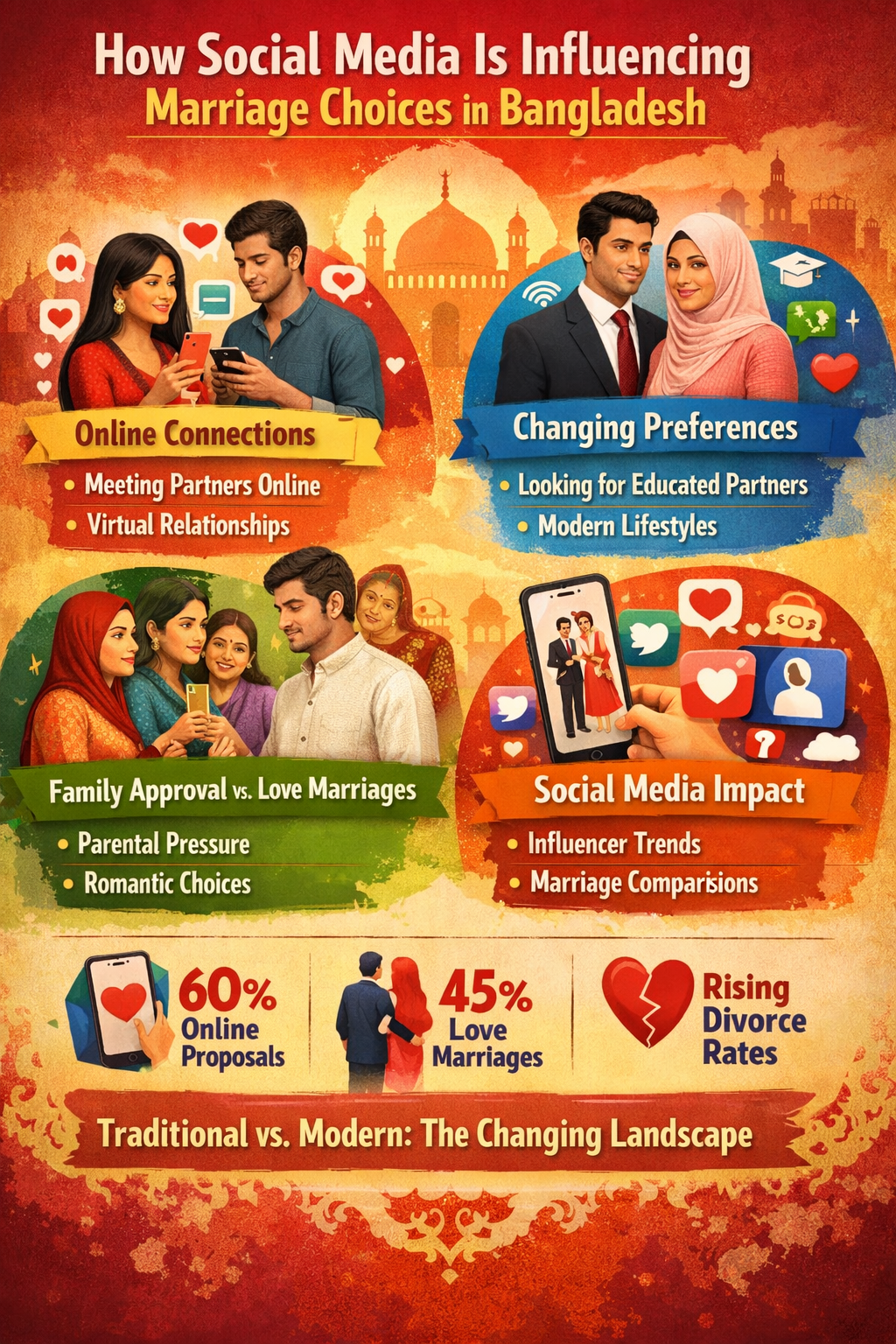
In Bangladesh, marriage has always been more than just a union between two individuals—it is a deeply rooted social institution influenced by family, religion, and cultural expectations. For decades, decisions about marriage were primarily controlled by parents, relatives, and community norms. However, the rapid rise of social media platforms like Facebook, Instagram, WhatsApp, and TikTok has dramatically reshaped this landscape.
Today, social media is not just a communication tool—it is a powerful force influencing how people meet, evaluate, and choose their life partners. From urban areas like Dhaka and Gulshan to semi-urban and even rural regions, digital platforms are redefining the traditional rules of marriage.
This transformation is not entirely positive or negative—it is complex, layered, and evolving. Social media has introduced new opportunities for connection, but it has also created new challenges around trust, expectations, and emotional stability.
In this article, we will explore in depth how social media is influencing marriage choices in Bangladesh—covering trends, benefits, risks, psychological impacts, and what it means for the future of relationships.
The Traditional Marriage System in Bangladesh
Before understanding the influence of social media, it is important to understand how marriage decisions were traditionally made in Bangladesh.
Historically:
- Families played the central role in matchmaking
- Social status, religion, and financial stability were key factors
- Personal choice was often limited
- Love marriages were less common and sometimes discouraged
Marriage was seen as a responsibility rather than a personal journey. Compatibility was judged based on family background rather than emotional connection.
However, with modernization, education, and urbanization, this rigid system began to shift—and social media accelerated this transformation.
The Rise of Social Media in Bangladesh
Over the last decade, Bangladesh has experienced a massive increase in internet usage and smartphone accessibility. Millions of young people now spend hours daily on social media platforms.
These platforms have become:
- A space for communication
- A platform for self-expression
- A tool for building relationships
More importantly, they have become a digital matchmaking environment, replacing or supplementing traditional methods.
Research shows that digital connectivity and social media are contributing to changing marriage patterns, including international marriages and cross-cultural relationships (Springer).
How Social Media Is Changing Marriage Choices
- Expanding the Pool of Potential Partners
One of the biggest impacts of social media is the expansion of choices.
Previously, people met potential partners through:
- Family connections
- Local community
- Educational institutions
Now, individuals can connect with:
- People from different cities
- Bangladeshis living abroad
- Individuals from different cultural or religious backgrounds
This has significantly increased the number of options, making marriage decisions more flexible and personalized.
However, this also creates a paradox—more choice often leads to more confusion.
- The Rise of Self-Selection Over Family Control
Social media has empowered individuals to take control of their own marriage decisions.
Instead of relying solely on family:
- People now communicate directly with potential partners
- Emotional compatibility is prioritized
- Personal preferences are openly expressed
This shift represents a move from arranged marriage to “assisted” or “semi-arranged” marriage, where both family and individual play roles.
- Changing Expectations of “Perfect Partner”
Social media has created a culture of perfection.
People constantly see:
- Romantic couple posts
- Luxury lifestyles
- “Perfect” relationships
This exposure influences expectations. Many individuals now look for:
- Attractive appearance
- Financial success
- Social status
- Lifestyle compatibility
According to research, social media often shapes decisions based on what is considered socially acceptable or desirable, influencing relationship expectations (Ignited Minds).
The result?
- Unrealistic standards
- Increased dissatisfaction
- Delayed marriage decisions
- The Influence of Online Identity
On social media, people present curated versions of themselves.
Profiles often highlight:
- Best photos
- Achievements
- Lifestyle
This creates a digital identity, which may not fully reflect reality.
As a result:
- Marriage decisions may be based on incomplete or misleading information
- People may fall in love with an image, not a person
This gap between online and offline reality can later lead to disappointment.
- Communication Before Marriage
Social media has made it easier for couples to communicate before marriage.
Unlike the past:
- Couples now chat regularly
- They share thoughts, values, and emotions
- They build emotional connections
This has both positive and negative sides.
Positive:
- Better understanding before marriage
- Reduced uncertainty
Negative:
- Emotional attachment without real-life compatibility
- Miscommunication or false expectations
Studies show that social media significantly affects communication patterns between couples, influencing relationship satisfaction (assajournal.com).
- Cross-Cultural and International Marriages
Social media has made it easier for Bangladeshis to connect globally.
This has led to:
- Increase in international marriages
- Exposure to different cultures and values
Research indicates that globalization and social media are key drivers behind the rise of international marriages in Bangladesh (Springer).
While this opens new opportunities, it also introduces challenges:
- Cultural differences
- Family acceptance issues
- Long-distance relationship struggles
- Influence of Peer Opinions and Social Validation
Social media has made marriage decisions more public.
People often:
- Share their relationships online
- Seek validation through likes and comments
- Compare their relationship with others
This creates pressure to:
- Choose partners who “look good” socially
- Maintain a certain image
As a result, decisions are sometimes influenced more by public perception than personal compatibility.
The Dark Side: Negative Impacts of Social Media on Marriage
- Unrealistic Comparisons
Many people compare their real-life relationships with others’ “highlight reels.”
A Reddit user described this perfectly:
“They will constantly be comparing their relationship with strangers…” (Reddit)
This leads to:
- Dissatisfaction
- Unrealistic expectations
- Emotional frustration
- Increased Trust Issues
Social media has made it easier to:
- Hide conversations
- Connect with strangers
- Maintain secret interactions
Research shows that digital communication can contribute to trust issues and even marital conflict (RSIS International).
- Rise of Emotional and Digital Infidelity
Online chatting and interactions can lead to:
- Emotional affairs
- Flirting outside marriage
- Breakdown of trust
Studies in South Asia highlight how social media has contributed to changing definitions of fidelity and increased extramarital interactions (SSRN).
- Addiction and Neglect of Real Relationships
Excessive social media use can:
- Reduce quality time between couples
- Decrease emotional bonding
- Increase conflict
Research indicates that overuse of social media can negatively impact relationship quality and communication (ResearchGate).
- Privacy Issues
Sharing too much online can:
- Expose personal life
- Invite unwanted opinions
- Create external pressure
Many couples struggle to maintain a balance between privacy and public sharing.
Positive Impacts of Social Media on Marriage Choices
Despite the challenges, social media also offers significant benefits.
- Greater Freedom of Choice
Individuals now have the freedom to:
- Choose partners based on compatibility
- Avoid forced marriages
- Better Communication
Couples can:
- Talk openly
- Understand each other better
- Build emotional connections
- Awareness and Education
Social media provides access to:
- Relationship advice
- Marriage counseling content
- Real-life experiences
- Breaking Social Barriers
Social media helps break barriers related to:
- Class
- Location
- Culture
This creates more inclusive marriage choices.
The Psychological Impact on Marriage Decisions
Social media affects not only behavior but also psychology.
Fear of Missing Out (FOMO)
People constantly feel:
- “Maybe I can find someone better”
- “I should not settle yet”
This delays marriage decisions.
Decision Paralysis
Too many options lead to:
- Confusion
- Inability to commit
Validation Dependency
People rely on:
- Likes
- Comments
- Social approval
This weakens internal decision-making.
Urban vs Rural Differences in Bangladesh
Urban Areas (Dhaka, Gulshan)
- High social media usage
- More love and semi-arranged marriages
- Greater independence
Rural Areas
- Increasing social media influence
- Still strong family control
- Gradual transition
The Role of Marriage Media in the Social Media Era
In this changing landscape, professional marriage media services are becoming more important.
They offer:
- Verified profiles
- Privacy protection
- Serious matchmaking
Unlike random social media connections, marriage media ensures:
- Authenticity
- Compatibility
- Family involvement
This is especially important in an era where fake profiles and misleading identities are common.
The Future of Marriage in Bangladesh
The future of marriage in Bangladesh will likely be a hybrid model:
- Personal choice + Family involvement
- Online connection + Offline verification
- Emotional compatibility + Social compatibility
Social media will continue to play a major role, but its influence will evolve as people become more aware of its pros and cons.
Conclusion: A Double-Edged Sword
Social media is neither entirely good nor entirely bad—it is a powerful tool.
It has:
- Empowered individuals
- Expanded opportunities
- Transformed communication
But it has also:
- Created unrealistic expectations
- Increased trust issues
- Complicated decision-making
The key lies in balance.
For individuals in Bangladesh, the challenge is to use social media wisely—to benefit from its advantages while avoiding its pitfalls.
Marriage is one of the most important decisions in life. While social media can help you find a partner, it should never replace real-life understanding, family values, and genuine emotional connection.
How Social Media Is Influencing Marriage Choices in Bangladesh (Extended Part)
The Role of Algorithms in Shaping Relationship Preferences
One of the most overlooked aspects of social media is how algorithms influence what users see—and ultimately, how they think.
Platforms like Facebook, Instagram, and TikTok are designed to show content that aligns with user interests. Over time, this creates a personalized digital environment, often called a “filter bubble.”
How This Affects Marriage Choices:
- If someone frequently watches luxury lifestyle content, they may begin to prioritize wealth in a partner
- If someone engages with romantic content, they may develop unrealistic emotional expectations
- Exposure to “ideal couples” can shape what someone believes a marriage should look like
This algorithm-driven exposure subtly trains users to:
- Desire specific traits
- Reject partners who don’t match curated ideals
- Judge compatibility based on surface-level qualities
In Bangladesh, where traditional values once dominated decision-making, this shift is particularly significant.
Social Media and the Rise of “Personal Branding” in Marriage
Today, individuals are not just people—they are “brands” on social media.
Profiles are carefully curated to show:
- Career success
- Education
- Travel experiences
- Lifestyle choices
This creates a new dynamic in marriage:
Marriage as a “Brand Match”
Instead of simply asking:
- “Is this person good for me?”
People now ask:
- “Does this person fit my image?”
- “Will this relationship look good publicly?”
This shift has led to:
- Increased focus on external validation
- Pressure to maintain a certain image
- Relationships built on perception rather than depth
In elite areas like Dhaka’s urban circles, this effect is even stronger.
The Impact of Influencers on Marriage Expectations
Social media influencers play a major role in shaping how people think about relationships.
From couple vloggers to lifestyle influencers, they present:
- Perfect relationships
- Romantic gestures
- Luxury weddings
The Problem with Influencer Culture
Most influencer content is:
- Edited
- Scripted
- Selectively shared
But viewers often perceive it as reality.
This leads to:
- Unrealistic expectations of romance
- Pressure to replicate “Instagram-worthy” relationships
- Dissatisfaction with normal, imperfect relationships
In Bangladesh, where weddings are already culturally significant, influencer culture has intensified expectations around:
- Wedding আয়োজন (arrangements)
- Photography
- Lifestyle after marriage
The Changing Role of Parents in the Social Media Era
Traditionally, parents were the primary decision-makers in marriage.
Now, social media has:
- Reduced parental control
- Increased individual independence
New Dynamics Between Parents and Children
- Parents are now more open to children’s choices
- Children often introduce partners they met online
- Discussions are more collaborative
However, conflicts still arise when:
- Parents distrust online relationships
- Cultural values clash with modern choices
- Family reputation becomes a concern
This creates a negotiation-based marriage system, rather than a strictly arranged one.
Social Media and the Delay of Marriage
One noticeable trend in Bangladesh is that people are marrying later than before.
Reasons Linked to Social Media:
- Endless Options
- People feel they can always find someone better
- Fear of Settling
- Influenced by idealized relationships
- Career Focus
- Social media promotes ambition and independence
- Emotional Confusion
- Multiple interactions without commitment
This delay is especially common among:
- Urban professionals
- Educated individuals
- Social media-active users
Online Reputation and Marriage Decisions
In today’s world, a person’s social media profile acts as a digital background check.
Before considering marriage, people often:
- Review Facebook profiles
- Check Instagram posts
- Analyze friend lists and interactions
What People Look For:
- Behavior and personality
- Social circle
- Lifestyle habits
- Religious or cultural values
Risks:
- Misjudgment based on limited information
- Over-analysis of minor details
- Privacy invasion
In many cases, a single post or photo can influence a marriage decision.
Gender Differences in Social Media Influence
Social media does not affect men and women equally.
For Women:
- Increased pressure to look attractive
- Judgment based on appearance and lifestyle
- Higher scrutiny of online behavior
For Men:
- Pressure to show financial success
- Expectation of a “successful” image
- Evaluation based on career and status
This creates a performance culture, where both genders feel the need to present ideal versions of themselves.
The Role of Social Media in Breakups Before Marriage
Many relationships formed through social media end before marriage.
Common Reasons:
- Miscommunication
- Unrealistic expectations
- Lack of real-life compatibility
- Discovery of hidden truths
Because relationships often start digitally:
- Emotional connection develops quickly
- But real-life understanding remains limited
This leads to:
- Frequent breakups
- Emotional instability
- Trust issues in future relationships
The Influence of Viral Trends on Marriage Culture
Social media trends often influence real-life behavior.
Examples include:
- Proposal styles
- Wedding themes
- Couple challenges
Impact in Bangladesh:
- Increase in themed weddings
- Focus on “viral moments”
- Pressure to create shareable content
Marriage is gradually becoming not just a personal event—but a public performance.
Social Media and Religious Values in Marriage
Bangladesh is a culturally and religiously grounded society.
Social media has created a unique interaction between:
- Modern lifestyle
- Religious values
Observations:
- Some people become more religious through online content
- Others adopt more liberal views
This affects marriage choices in terms of:
- Partner expectations
- Lifestyle compatibility
- Family acceptance
Balancing these differences has become more complex.
The Emergence of Online Matchmaking Communities
Beyond individual interactions, social media has given rise to:
- Facebook marriage groups
- WhatsApp matchmaking networks
- Online communities for الزواج (marriage)
These platforms act as informal marriage media.
Benefits:
- Wide reach
- Quick connections
- Cost-effective
Risks:
- Lack of verification
- Fake profiles
- Scams
This is why professional marriage media services are still crucial.
Digital Communication vs Real-Life Interaction
One major issue in social media-based relationships is the gap between:
- Online communication
- Offline reality
Online:
- Controlled responses
- Edited personality
- Limited context
Offline:
- Real behavior
- Emotional reactions
- Lifestyle habits
Many couples struggle when transitioning from:
- Chatting → Meeting → Marriage
Because the person they meet may not match the person they imagined.
Social Media and Emotional Dependency
Social media creates constant connectivity.
Couples often:
- Text all day
- Share every detail
- Depend on instant responses
Risks:
- Emotional dependency
- Anxiety when communication is delayed
- Unrealistic expectations of availability
Healthy relationships require space—but social media often removes that space.
The Economic Influence of Social Media on Marriage
Social media has also affected the financial aspects of marriage.
Increased Expectations:
- Expensive weddings
- Luxury lifestyle
- High-status partners
This creates pressure on:
- Men to earn more
- Families to spend more
As a result:
- Financial stress increases
- Marriage becomes more difficult for middle-class individuals
Social Media Literacy: A Necessary Skill for Modern Marriage
In today’s world, choosing a partner is not just about compatibility—it also requires digital awareness.
Important Skills:
- Identifying fake profiles
- Understanding online behavior
- Maintaining privacy
- Setting boundaries
Without these skills, individuals are more vulnerable to:
- Emotional manipulation
- Fraud
- Poor decision-making
The Role of Trust in the Digital Age
Trust has become more complicated due to social media.
Questions like:
- “Who are they talking to?”
- “Why did they like this post?”
Have become common in relationships.
Building Trust Requires:
- Transparency
- Honest communication
- Respect for boundaries
Without trust, social media can easily damage relationships.
Case Study Style Insights (Typical Scenarios in Bangladesh)
Scenario 1: The “Perfect Profile” Illusion
A person chooses a partner based on:
- Attractive photos
- Impressive lifestyle
After marriage, they discover:
- Personality mismatch
- Different values
Scenario 2: Long-Term Chat, Short-Term Reality
A couple talks online for months.
But after meeting:
- No real connection
- Different expectations
Scenario 3: Social Pressure Marriage
A relationship is rushed because:
- It looks good publicly
- Friends and followers approve
But internally:
- Compatibility is weak
How to Use Social Media Wisely for Marriage Decisions
Practical Guidelines:
- Do Not Rely Only on Online Interaction
- Verify Information Properly
- Involve Family When Necessary
- Focus on Values, Not Just Image
- Take Time Before Making Decisions
Why Professional Marriage Media Still Matters
In the era of social media, professional services provide:
- Verified profiles
- Privacy protection
- Serious matchmaking
They reduce risks associated with:
- Fake identities
- Misleading information
- Emotional confusion
For people seeking serious marriage, this structured approach is more reliable.
The Future: Smarter, Balanced Decision-Making
As awareness grows, people are learning to:
- Use social media as a tool, not a decision-maker
- Balance online interaction with real-life evaluation
- Focus on long-term compatibility
The future of marriage in Bangladesh will depend on how well individuals manage this balance.
Extended Conclusion
Social media has completely transformed how marriage choices are made in Bangladesh.
It has:
- Expanded opportunities
- Empowered individuals
- Changed expectations
But it has also:
- Created confusion
- Increased pressure
- Complicated relationships
The reality is simple:
Social media can help you meet someone—but it cannot guarantee a successful marriage.
True compatibility comes from:
- Real-life interaction
- Shared values
- Mutual respect
In the end, the smartest approach is not to reject social media—but to use it wisely.
Final Reflection
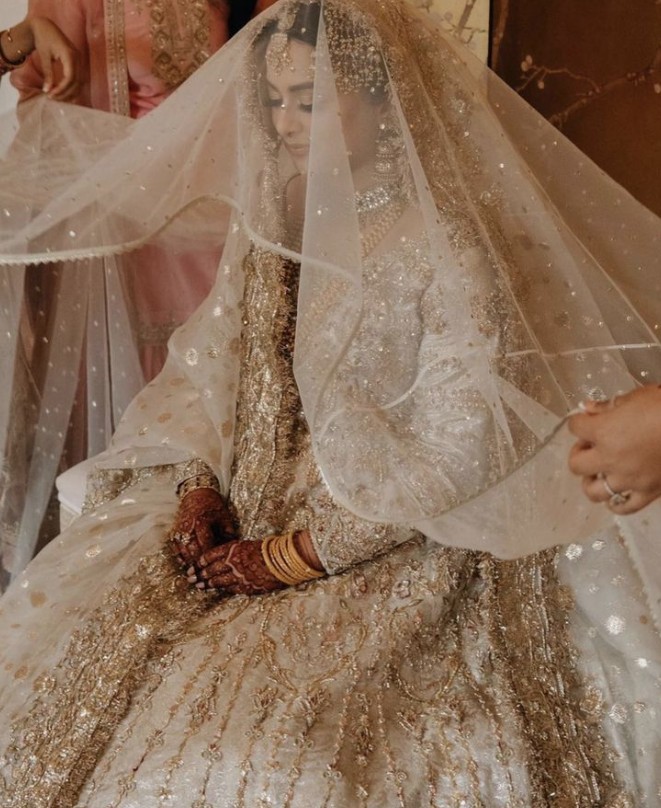
Marriage is one of life’s most important decisions.
In a world full of:
- Filters
- Edits
- Online personas
Choosing a life partner requires clarity, patience, and emotional intelligence.
Because beyond every profile, post, and message—there is a real human being.
And that reality is what truly matters.