






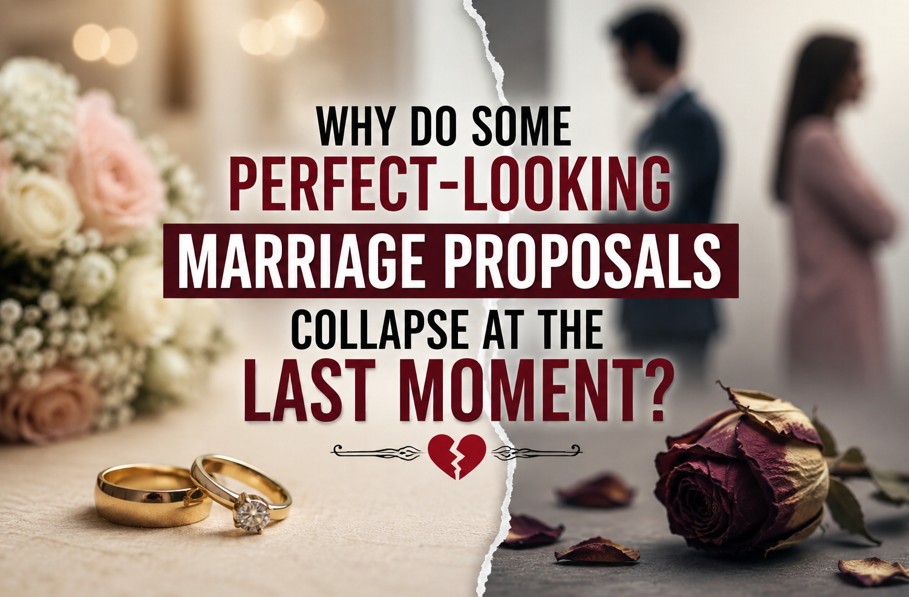
Why Do Some Perfect-Looking Marriage Proposals Collapse at the Last Moment?

Introduction
Many marriage proposals appear perfect from the outside. The families seem compatible, educational backgrounds match, financial situations are satisfactory, and both individuals express interest in moving forward. Relatives become excited, wedding discussions begin, and everyone assumes that the marriage is almost certain to happen.
Yet surprisingly, many of these seemingly ideal proposals collapse just days or weeks before engagement or marriage. What appeared to be a perfect match suddenly falls apart, leaving both families confused and disappointed.
This phenomenon is becoming increasingly common in modern matchmaking. Whether the proposal comes through family connections, friends, marriage media services, or online matrimonial platforms, last-minute cancellations can happen for various reasons.
The truth is that a proposal that looks perfect on paper may hide unresolved issues beneath the surface. Understanding these issues can help individuals and families make better decisions and avoid unnecessary heartbreak.
In this article, we will explore the most common reasons why perfect-looking marriage proposals collapse at the last moment and how such situations can be prevented.
The Difference Between Looking Perfect and Being Compatible
One of the biggest misconceptions in marriage is assuming that good qualifications automatically mean good compatibility.
A person may have:
- Excellent education
- High income
- Attractive appearance
- Respectable family background
- Strong social status
These qualities certainly make a proposal attractive. However, they do not guarantee long-term compatibility.
Marriage requires much more than matching resumes. It requires emotional understanding, shared values, mutual respect, communication skills, and similar life goals.
Many proposals collapse because families focus heavily on visible achievements while ignoring deeper compatibility factors.
Hidden Expectations Begin to Surface
During the early stages of discussions, people often present their best selves.
They avoid controversial topics and focus on positive aspects. However, as the proposal progresses, hidden expectations begin to emerge.
Questions arise such as:
- Where will the couple live?
- Will both spouses work after marriage?
- How involved will parents be?
- Who will handle financial responsibilities?
- Are there plans to move abroad?
When expectations differ significantly, serious conflicts can develop.
For example, one person may expect a traditional family structure while the other prefers a modern partnership. Such differences may not become apparent until the proposal is close to finalization.
Communication Gaps Create Misunderstandings
Poor communication remains one of the most common reasons proposals fail.
Many families avoid discussing important topics because they fear creating tension.
As a result:
- Assumptions replace facts.
- Expectations remain unclear.
- Misunderstandings grow.
A small misunderstanding can quickly become a major obstacle when emotions are involved.
Sometimes both parties are actually compatible but fail to communicate effectively. The resulting confusion leads one side to withdraw from the proposal.
Family Pressure Changes Decisions
Marriage rarely involves only two individuals.
Parents, siblings, relatives, and even close family friends often influence the process.
A candidate who initially likes a proposal may later face pressure from family members who raise concerns such as:
- Social status differences
- Financial comparisons
- Geographic location
- Cultural practices
- Educational qualifications
Sometimes relatives identify issues that were previously overlooked.
Other times, family members simply prefer another proposal.
This external influence can dramatically change decisions at the last moment.
Unrealistic Expectations Destroy Opportunities
Modern society often promotes unrealistic standards regarding marriage.
Many individuals believe they can find someone who is:
- Highly educated
- Extremely attractive
- Financially successful
- Emotionally perfect
- Socially respected
- Completely compatible
In reality, no person meets every ideal criterion.
As wedding discussions advance, some people begin focusing on minor imperfections rather than major strengths.
They convince themselves that a better proposal may appear soon.
This pursuit of perfection frequently causes promising proposals to collapse unnecessarily.
Fear of Commitment Appears Suddenly
Marriage represents one of life’s most significant commitments.
Even individuals who genuinely want marriage may experience fear as the wedding becomes more real.
Questions start appearing:
- Am I making the right choice?
- What if I regret this decision?
- What if someone better comes later?
- Am I ready for married life?
This phenomenon is often called “commitment anxiety.”
The closer the marriage approaches, the stronger these fears may become.
Some individuals respond by postponing or canceling the proposal altogether.
Financial Concerns Become More Important
Initially, financial matters may appear manageable.
However, as discussions become serious, practical realities emerge.
Families start evaluating:
- Current income
- Future earning potential
- Lifestyle expectations
- Housing arrangements
- Financial obligations
Sometimes new information changes perceptions.
For example:
- Debt becomes known.
- Business instability is discovered.
- Income claims prove inaccurate.
Financial uncertainty can quickly weaken confidence in a proposal.
Background Verification Reveals New Information
Responsible families often conduct background verification before finalizing a marriage.
This process may reveal information that was previously unknown.
Examples include:
- Inaccurate educational claims
- Hidden debts
- Previous engagements
- Family conflicts
- Professional issues
Even when the information is not necessarily disqualifying, discovering it late can damage trust.
Trust is extremely difficult to rebuild once doubts arise.
As a result, proposals sometimes collapse immediately after background checks.
Social Media Creates New Challenges
In today’s digital world, social media plays a significant role in marriage decisions.
Families frequently review online profiles before finalizing proposals.
Problems arise when they discover:
- Contradictory information
- Inappropriate content
- Excessive public behavior
- Evidence of dishonesty
Even misunderstandings can create concern.
A social media post that seems harmless to one person may appear problematic to another family.
Digital impressions now influence marriage decisions more than ever before.
Lack of Emotional Readiness
Not everyone seeking marriage is emotionally prepared for it.
Some individuals pursue proposals because:
- Family pressure exists.
- Friends are getting married.
- Society expects it.
However, they may still be emotionally unprepared.
Signs include:
- Difficulty making decisions
- Fear of responsibility
- Inability to compromise
- Resistance to long-term commitment
These issues often emerge only when the proposal becomes serious.
Consequently, the individual may decide to withdraw.
Previous Relationship Baggage
Past experiences can significantly influence present decisions.
Someone who experienced:
- A painful breakup
- A broken engagement
- Family conflict
- Trust issues
may struggle to move forward confidently.
Even when a proposal is excellent, unresolved emotional baggage can create hesitation.
Without proper healing, old fears may interfere with new opportunities.
Differences in Life Goals
At first glance, two individuals may seem perfectly matched.
However, deeper conversations sometimes reveal major differences.
For example:
One person wants:
- A large family
- A traditional lifestyle
- Living near parents
The other prefers:
- Career-focused living
- International relocation
- Delayed parenthood
Such differences affect the future directly.
When discovered late, they often cause proposals to collapse.
Ego and Pride Become Obstacles
Marriage requires flexibility and compromise.
Unfortunately, ego can become a powerful obstacle.
Common examples include:
- Refusing to apologize
- Insisting on being right
- Competing rather than cooperating
- Taking offense easily
Small disagreements become major conflicts when pride dominates decision-making.
In many cases, the proposal ends not because of serious incompatibility but because neither side wants to compromise.
External Comparisons Create Doubt
Comparison has become a major challenge in modern matchmaking.
People constantly compare proposals based on:
- Income
- Appearance
- Family status
- Location
- Educational achievements
Even when satisfied initially, some individuals become uncertain after hearing about another proposal.
The belief that a better option exists can destroy confidence in a good match.
Ironically, those who keep comparing often remain dissatisfied regardless of whom they choose.
Timing Problems
Sometimes neither party is at fault.
Life circumstances simply create poor timing.
Examples include:
- Job changes
- Family emergencies
- Health concerns
- Relocation plans
- Financial instability
These situations may force families to postpone or cancel marriage plans.
Although disappointing, timing issues are often unavoidable.
Trust Is Broken Before Marriage
Trust forms the foundation of every successful relationship.
When dishonesty appears during the proposal process, confidence can disappear immediately.
Common examples include:
- Exaggerated income
- Hidden personal history
- False educational information
- Misleading family details
Even small lies create larger concerns.
Families often wonder:
“If this information was hidden before marriage, what else may be hidden later?”
As a result, proposals may end abruptly.
The Influence of Modern Choice Overload
Technology has increased access to potential partners.
While this creates opportunities, it also creates problems.
Many people believe:
- More options are always available.
- A better proposal is just around the corner.
- Settling is unnecessary.
This mindset leads to endless searching.
Rather than appreciating a strong proposal, individuals continue evaluating alternatives.
Consequently, good opportunities are lost.
Emotional Connection Never Fully Develops
A proposal may appear perfect from a practical perspective.
However, emotional connection remains essential.
Without genuine comfort, trust, and mutual understanding, the relationship may feel incomplete.
As the proposal progresses, one or both individuals may realize that the emotional foundation is weak.
Even when everything looks right externally, lack of emotional chemistry can lead to cancellation.
Warning Signs That a Proposal May Collapse
Families should pay attention to warning signs such as:
- Delayed responses
- Frequent uncertainty
- Avoidance of important discussions
- Constant changes in expectations
- Lack of enthusiasm
- Excessive family interference
- Unwillingness to make decisions
Recognizing these signs early can prevent larger disappointments later.
How to Prevent Last-Minute Proposal Failures
- Prioritize Honest Communication
Discuss important topics early.
Avoid assumptions.
Clarify expectations regarding:
- Career
- Finances
- Family involvement
- Living arrangements
- Future goals
- Focus on Compatibility
Do not evaluate proposals solely on status, income, or appearance.
Look for:
- Shared values
- Emotional maturity
- Communication skills
- Respect
- Long-term compatibility
- Conduct Verification Early
Background checks should occur early rather than at the final stage.
This reduces surprises and builds trust.
- Manage Expectations
Understand that no person is perfect.
Seek compatibility rather than perfection.
- Allow Meaningful Conversations
Give both individuals sufficient time to understand each other.
Strong communication often reveals compatibility more accurately than family assumptions.
- Involve Families Constructively
Family support is valuable.
However, excessive interference can create unnecessary complications.
Balance family guidance with individual decision-making.
The Role of Professional Matchmaking Services
Professional marriage media services can reduce many risks associated with last-minute proposal failures.
Experienced matchmakers help by:
- Screening profiles carefully
- Verifying information
- Understanding compatibility factors
- Facilitating communication
- Managing expectations
Organizations such as Gulshan Marriage Media focus not only on introductions but also on helping families make informed decisions throughout the matchmaking process.
This structured approach often reduces misunderstandings and increases the likelihood of successful outcomes.
Additional Insights: Why Families Often Regret Rejecting Good Marriage Proposals
One interesting reality of the marriage process is that some families only realize the value of a proposal after it has disappeared.
When a proposal is available, people often focus on what is missing rather than what is present. They notice small shortcomings and become overly concerned about details that may have little impact on long-term marital happiness.
Months or even years later, after meeting numerous other candidates, they begin to understand that the previous proposal offered many qualities that were difficult to find elsewhere.
This regret often occurs because people evaluate marriage proposals emotionally rather than objectively.
Questions such as:
- “Can we get someone better?”
- “Should we wait a little longer?”
- “What if another proposal comes next month?”
can lead to unnecessary delays.
Unfortunately, good proposals rarely remain available forever. Once rejected, the opportunity may never return.
Therefore, families should be careful not to dismiss genuinely compatible matches while chasing unrealistic ideals.
The Impact of Community Opinions
In many societies, especially in South Asian cultures, community opinions still influence marriage decisions significantly.
Even when two families are satisfied, comments from outsiders can create doubt.
Examples include:
- “You can find a better proposal.”
- “Their family is not as influential as yours.”
- “Why are you agreeing so quickly?”
- “You should look for someone with a higher salary.”
Such remarks may seem harmless, but they often create confusion.
The unfortunate reality is that people giving advice do not have to live with the consequences of the marriage decision.
The couple and their families are the ones who must build the relationship.
Allowing outsiders to influence major decisions frequently results in missed opportunities and broken proposals.
How Excessive Investigation Can Damage Trust
Verification is important, but excessive investigation can become harmful.
Some families continue investigating even after receiving satisfactory information.
They repeatedly question:
- Friends
- Colleagues
- Neighbors
- Extended relatives
Eventually, this behavior creates suspicion.
The other family may feel insulted and begin questioning whether trust exists at all.
A healthy balance is necessary.
Responsible verification protects families from deception, but endless investigation can destroy a perfectly good proposal.
Trust must eventually replace suspicion if a marriage is going to succeed.
The Role of Emotional Intelligence
Many people underestimate the importance of emotional intelligence during the proposal process.
Emotional intelligence includes:
- Self-awareness
- Empathy
- Patience
- Communication skills
- Conflict management
A highly educated individual with poor emotional intelligence may struggle in marriage.
Conversely, a person with average qualifications but strong emotional maturity often becomes an excellent spouse.
When proposals collapse unexpectedly, emotional intelligence is often a hidden factor.
For example:
- Someone becomes defensive during discussions.
- Small disagreements escalate unnecessarily.
- Criticism is handled poorly.
- Different opinions are viewed as personal attacks.
These behaviors raise concerns about future marital stability.
As a result, families may decide not to proceed.
Why Transparency Matters More Than Perfection
Many people attempt to present an ideal image during matchmaking.
They hide weaknesses because they fear rejection.
Ironically, this strategy often produces the opposite result.
Most families understand that nobody is perfect.
What they seek is honesty.
For example:
A person may have:
- A previous engagement
- Financial responsibilities
- Family challenges
- Career uncertainties
These issues are not necessarily deal-breakers.
However, hiding them creates a trust problem.
When important information emerges later, families feel deceived.
Transparency builds confidence.
Perfection creates pressure.
In most cases, honesty is far more attractive than an unrealistic image of perfection.
The Importance of Shared Values
Many successful marriages are built on shared values rather than identical personalities.
Two people can have different hobbies, interests, and habits while still maintaining a strong relationship.
However, differences in core values can become problematic.
Important values include:
- Honesty
- Family responsibility
- Religious beliefs
- Financial attitudes
- Respect for elders
- Parenting philosophy
When these values align, couples often navigate challenges successfully.
When they differ significantly, conflict becomes more likely.
Some proposals collapse because these fundamental differences become visible only during the final stages.
Why Marriage Should Never Feel Like a Competition
One mistake that occasionally occurs during matchmaking is treating marriage proposals as competitions.
Families compare:
- Income levels
- Property ownership
- Social influence
- Educational credentials
The focus shifts from compatibility to status.
Marriage is not a business transaction.
It is not a competition to secure the most impressive profile.
A successful marriage depends on whether two people can build a stable, respectful, and supportive life together.
Families that prioritize status over compatibility often experience disappointment later.
Those who prioritize character and values tend to make wiser decisions.
Learning From Failed Proposals
Not every failed proposal should be viewed as a tragedy.
Sometimes a collapsed proposal provides valuable lessons.
It may reveal:
- Unrealistic expectations
- Communication weaknesses
- Areas for personal growth
- Important compatibility concerns
Instead of focusing solely on disappointment, individuals can use these experiences to make better future decisions.
Questions worth asking include:
- What did I learn from this experience?
- Were there warning signs I ignored?
- Did I communicate effectively?
- Were my expectations realistic?
Honest reflection helps people approach future opportunities with greater maturity and wisdom.
Final Thoughts
When a perfect-looking marriage proposal collapses at the last moment, the event often seems shocking. Yet in most cases, the warning signs were present long before the final decision.
Successful marriages are rarely built on impressive resumes, social status, beauty, or wealth alone.
They are built on:
- Trust
- Transparency
- Emotional maturity
- Shared values
- Communication
- Mutual respect
Families who understand these principles are far more likely to make sound decisions during the matchmaking process.
The goal should never be to find a perfect person because perfection does not exist.
The goal should be to find someone whose strengths, values, and life goals align with your own.
When compatibility becomes the priority instead of perfection, the chances of building a lasting and fulfilling marriage increase dramatically.
Conclusion
A marriage proposal may look perfect from the outside yet still collapse at the last moment. The reasons are rarely simple.
Hidden expectations, communication gaps, family pressure, commitment fears, financial concerns, trust issues, and compatibility differences all play important roles.
The key lesson is that successful marriages are not built solely on impressive qualifications or social status. They are built on honesty, understanding, trust, emotional maturity, and shared goals.
Families and individuals who focus on these deeper factors are far more likely to build lasting relationships and avoid the disappointment of last-minute proposal failures.
Instead of searching for a flawless proposal, it is wiser to search for a compatible partner. Perfection may be impossible, but compatibility creates the foundation for a happy and successful marriage.