





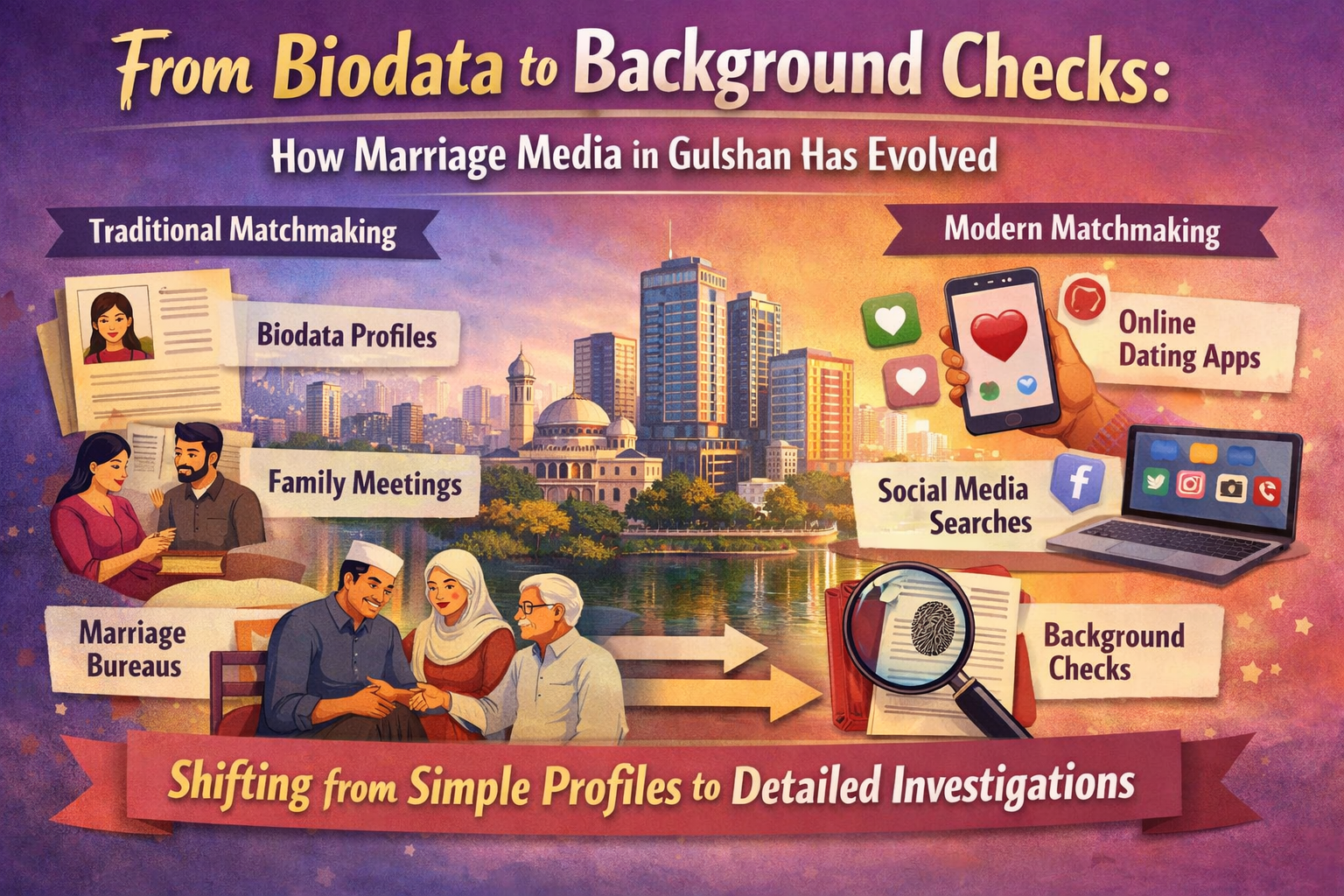
From Biodata to Background Checks: How Marriage Media in Gulshan Has Evolved
In Dhaka’s ever-evolving social landscape, few things have transformed as quietly—but as powerfully—as the process of finding a life partner. What once depended entirely on handwritten biodata and trusted relatives has now become a sophisticated, multi-layered system involving verification, psychology, privacy, and professionalism.
Nowhere is this transformation more visible than in Gulshan—the heart of elite, modern matchmaking in Bangladesh.
This is not just a story of technology.
It’s a story of trust evolving with time.
The Beginning: When Biodata Was Everything
Before marriage media offices, before online profiles, before digital verification—there was biodata.
A simple document.
It usually included:
- Name, age, height
- Education
- Profession
- Family background
- Religion
And that was enough.
Families would exchange these biodatas through:
- Relatives
- Neighbors
- Trusted “ghotoks” (traditional matchmakers)
The process was deeply personal and rooted in community trust. But it also had limitations.
Because biodata, at its core, is just a presentation—not a verification.
And back then, people relied more on:
- Reputation
- Social circles
- Word-of-mouth credibility
The Era of the Ghotok: Trust Without Structure
The traditional ghotok system played a central role in Bangladeshi marriages for generations.
These matchmakers:
- Knew families personally
- Maintained social networks
- Acted as bridges between two households
It was a system built on human relationships, not data.
But as Dhaka grew larger and more complex, cracks began to appear:
- Networks became limited
- Information became harder to verify
- Bias and misinformation sometimes entered the process
As one online discussion reflects:
“Don’t trust everything the biodata suggests…” (Reddit)
That simple line captures a deeper truth:
people began realizing that biodata alone wasn’t enough anymore.
The Shift: Newspaper Matrimonials and Wider Reach
The next evolution came with newspaper advertisements.
For the first time:
- Families could reach beyond their immediate circles
- More options became available
- Matchmaking became slightly more structured
But this system still had limitations:
- Information was brief and often incomplete
- No verification system existed
- Follow-up depended entirely on families
It expanded reach—but not necessarily reliability.
The Digital Boom: Profiles, Apps, and New Problems
Then came the internet.
Marriage websites, apps, and Facebook groups changed everything.
Now people could:
- Create detailed profiles
- Filter matches by education, income, location
- Communicate directly
It felt like a revolution.
And in many ways, it was.
But along with convenience came new challenges:
The Rise of Fake Profiles
Unlike traditional systems, digital platforms lacked personal accountability.
People started facing:
- Misleading information
- Fake identities
- Hidden pasts
Too Many Options, Less Clarity
Instead of limited options, people now had too many.
This led to:
- Decision fatigue
- Superficial judgment
- Endless searching without commitment
Lack of Serious Intent
Many platforms blurred the line between:
- Dating
- Marriage
Which created confusion—especially for those seeking serious relationships.
As one Reddit user shared:
“Filled with scammers… you have to filter.” (Reddit)
This reflects a growing concern in Dhaka’s matchmaking space:
access increased, but trust decreased.
The Rise of Marriage Media in Gulshan: A Turning Point
This is where the real transformation begins.
As Dhaka modernized, a new need emerged:
A system that combines traditional trust with modern efficiency.
And Gulshan became the center of that solution.
Why Gulshan?
Because it represents:
- Educated, professional individuals
- High expectations for compatibility
- A strong need for privacy and discretion
Over the past decade, marriage media services in Gulshan have grown rapidly—offering a structured alternative to both traditional and digital methods. (Gulshan Marriage Media)
From Biodata to Verified Profiles
One of the biggest shifts in Gulshan’s marriage media is this:
👉 Biodata is no longer accepted at face value.
Now, it goes through:
- Verification processes
- Family background checks
- Professional validation
Unlike earlier systems, modern marriage media ensures that:
- Information is accurate
- Claims are validated
- Risks are minimized
As noted in industry insights:
- Profiles are personally verified
- Family references are checked
- Professional details are confirmed (Gulshan Media)
This marks a critical evolution:
From “What is written” → to “What is proven”
The Era of Background Checks: Why It Became Essential
Background checks didn’t become popular by accident.
They became necessary.
Because modern marriage involves:
- Financial stability
- Social reputation
- Long-term compatibility
Families today want to know:
- Has the person been married before?
- Are their credentials genuine?
- Is their lifestyle consistent with what they claim?
In earlier times, this was handled informally.
Now, it is handled professionally.
And this shift has changed everything.
The Emergence of Confidential Matchmaking
Another major evolution is privacy.
In the digital age, visibility is easy—but privacy is rare.
Professionals in Gulshan often prefer:
- Discreet matchmaking
- Limited exposure
- Controlled communication
Marriage media services now offer:
- Confidential profiles
- Private introductions
- Controlled sharing of information
This is especially important for:
- Corporate professionals
- Business families
- Public figures
Because reputation matters.
From Quantity to Quality: The Curated Approach
Earlier systems focused on:
👉 “More proposals = better chances”
Modern marriage media in Gulshan focuses on:
👉 “Better matches = higher success”
Instead of hundreds of options, clients get:
- A few carefully selected matches
- Based on deep compatibility
This includes:
- Lifestyle alignment
- Education level
- Family values
- Personality traits
This shift reflects a broader understanding:
Marriage is not about finding many people.
It’s about finding the right one.
The Human Touch Returns—With Intelligence
Interestingly, after all the digital disruption, the system has come full circle.
But in a more advanced form.
Modern marriage media combines:
- Human intuition
- Professional experience
- Data-backed insights
Unlike algorithms, matchmakers:
- Understand emotional nuances
- Mediate between families
- Identify compatibility beyond numbers
This “human intelligence” is now considered more valuable than automated matching.
Bridging Generations: A Unique Role
One of the biggest challenges in modern Dhaka is the generation gap.
Parents often prioritize:
- Family background
- Cultural values
While individuals prioritize:
- Compatibility
- Career alignment
- Emotional connection
Marriage media in Gulshan plays a crucial role here by:
- Listening to both sides
- Aligning expectations
- Creating balanced matches
This dual approach ensures that:
- The individual feels understood
- The family feels respected
Globalization and Cross-Border Matchmaking
Another major evolution is globalization.
Today:
- Many Bangladeshis live abroad
- Families seek international matches
- Cross-cultural marriages are increasing
Marriage media now facilitates:
- Expat matchmaking
- Cross-regional connections
- Cultural compatibility across borders (Gulshan Media)
This was nearly impossible in the traditional system.
Emotional Intelligence in Modern Matchmaking
Perhaps the most underrated evolution is this:
👉 Matchmaking is no longer just about data.
👉 It’s about emotions.
Modern services consider:
- Personality compatibility
- Communication style
- Emotional readiness
Because a successful marriage is not built on:
- Degrees
- Income
- Status
It’s built on:
- Understanding
- Respect
- Connection
The New Definition of Trust
Trust used to mean:
👉 “We know the family”
Now, trust means:
👉 “We have verified everything”
This shift is critical.
Because in a large, fast-moving city like Dhaka:
- Personal networks are no longer enough
- Information must be validated
- Risks must be minimized
Marriage media in Gulshan has redefined trust as:
- Structured
- Professional
- Evidence-based
Challenges That Still Exist
Despite all these advancements, challenges remain:
- Unrealistic expectations
- Time constraints for professionals
- Emotional hesitation
Technology and systems can improve matchmaking.
But they cannot replace:
- Effort
- Openness
- Willingness to connect
The Future of Marriage Media in Gulshan
Looking ahead, the evolution is far from over.
We can expect:
- AI-assisted matchmaking (with human supervision)
- Deeper psychological compatibility analysis
- Even stronger verification systems
But one thing will remain constant:
👉 The need for trust and human connection
The journey from biodata to background checks is more than just a technical evolution.
It’s a reflection of how society itself has changed.
From:
- Small communities → to global networks
- Blind trust → to verified confidence
- Simple profiles → to deep compatibility
Marriage media in Gulshan stands at the center of this transformation.
It represents a new era where:
- Tradition is respected
- Modernity is embraced
- And trust is carefully built—not assumed
Because in the end, finding a life partner is not just about information.
It’s about certainty.
And that is something modern matchmaking is finally learning to provide.
From Biodata to Background Checks: How Marriage Media in Gulshan Has Evolved (Extended Deep Dive)
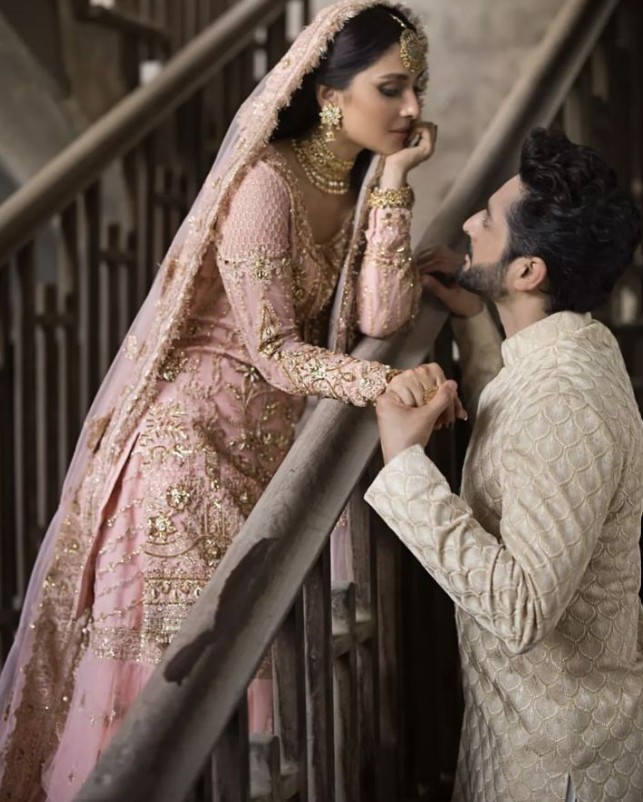
The transformation of marriage media in Gulshan is not just a story of better systems—it is a story of changing human behavior.
If we look closely, the evolution did not happen because technology suddenly appeared. It happened because people changed first. Their expectations grew. Their fears became more complex. Their lives became faster, more private, and more demanding.
Marriage media simply adapted.
And to understand where it stands today—and where it is heading—we need to go deeper into the forces that shaped this transformation.
The Psychology Behind the Shift
In earlier generations, marriage decisions were often guided by:
- Family reputation
- Social compatibility
- Religious alignment
Emotions were present, but they were not always the center of the process.
Today, that has changed.
Modern individuals—especially in areas like Gulshan—now prioritize:
- Emotional compatibility
- Communication style
- Personal values
This psychological shift created a gap.
Because traditional biodata cannot answer questions like:
- “Will we understand each other?”
- “Can we handle conflict together?”
- “Do we share similar life goals?”
And that gap is exactly where modern marriage media stepped in.
Why Information Alone Was No Longer Enough
At first glance, it may seem like adding more information to biodata would solve the problem.
But it didn’t.
Because the issue was not the quantity of information—it was the quality and authenticity.
People realized:
- A well-written profile can hide important truths
- Impressive credentials do not guarantee character
- Family reputation does not always reflect individual personality
This realization changed the entire approach to matchmaking.
Instead of asking:
“What does this profile say?”
People started asking:
“How much of this is real?”
And that question gave rise to the era of verification and background checks.
The Professionalization of Matchmaking
One of the most important developments in Gulshan’s marriage media landscape is professionalization.
Matchmaking is no longer seen as:
- A casual service
- A side activity
- A purely social responsibility
It is now treated as a structured profession.
Modern marriage media services operate with:
- Client management systems
- Confidential databases
- Verification protocols
- Consultation processes
This shift has elevated matchmaking from:
👉 Informal assistance
to
👉 Professional service
And with professionalism comes accountability.
The Rise of Client Expectations
As services became more structured, clients became more demanding.
Today’s clients don’t just want:
- A list of proposals
They expect:
- Curated matches
- Verified information
- Personalized attention
They want the process to be:
- Efficient
- Discreet
- Emotionally supportive
This has pushed marriage media in Gulshan to evolve further.
Because modern clients are not passive participants.
They are:
- Informed
- Selective
- Time-conscious
And they expect the service to match their standards.
The Hidden Complexity of “Compatibility”
Compatibility used to be defined simply:
- Same religion
- Similar family background
- Matching social status
But in today’s context, compatibility has become multi-dimensional.
It now includes:
Lifestyle Compatibility
- Work schedules
- Social habits
- Personal routines
Emotional Compatibility
- Communication style
- Conflict resolution
- Emotional availability
Intellectual Compatibility
- Education level
- Thought process
- Interests and worldview
Future Alignment
- Career goals
- Family planning
- Life priorities
Modern marriage media in Gulshan has adapted to consider all these layers.
Because without them, even the most “perfect” biodata can lead to mismatched marriages.
The Role of Discretion in Elite Matchmaking
In areas like Gulshan, privacy is not just a preference—it is a necessity.
Clients often include:
- Corporate executives
- Business owners
- Influential families
For them, public exposure can:
- Affect reputation
- Create unnecessary attention
- Lead to uncomfortable situations
This is why modern marriage media emphasizes:
- Confidential handling of profiles
- Controlled sharing of information
- Private communication channels
Unlike online platforms, where visibility is high, Gulshan-based services focus on selective visibility.
Because sometimes, the most valuable service is not finding matches—it’s protecting privacy.
The Changing Role of Families
Families are still deeply involved in marriage decisions.
But their role has evolved.
Earlier, families:
- Led the process
- Made final decisions
- Controlled interactions
Now, the dynamic is more balanced.
Individuals:
- Have stronger voices
- Make independent choices
- Seek emotional compatibility
Families:
- Provide guidance
- Ensure background credibility
- Support the final decision
Marriage media acts as a bridge between these two perspectives.
Ensuring that:
- The individual feels heard
- The family feels secure
This balancing act is one of the most complex—and valuable—roles of modern matchmaking services.
Why Background Checks Became a Standard
Background checks are no longer optional.
They are expected.
Because the risks of not verifying are too high.
These risks include:
- Misrepresented education or profession
- Hidden marital history
- Financial instability
- Character concerns
In a fast-paced city like Dhaka, where people often operate outside traditional community networks, these risks increase.
Background checks help reduce uncertainty.
They provide:
- Confidence
- Transparency
- Peace of mind
And in something as important as marriage, these are invaluable.
The Emotional Side of Verification
Interestingly, background checks are not just about facts.
They also impact emotions.
When clients know that:
- Profiles are verified
- Information is accurate
They feel:
- More relaxed
- More open
- More willing to invest emotionally
Without this assurance, people tend to:
- Hold back
- Doubt intentions
- Overanalyze details
So verification doesn’t just improve safety.
It improves emotional engagement.
The Shift from Reactive to Proactive Matchmaking
Traditional systems were reactive.
They worked like this:
- A biodata arrives
- Families review it
- Meetings are arranged
Modern marriage media is proactive.
It involves:
- Understanding client preferences deeply
- Searching for compatible profiles
- Recommending matches strategically
This approach saves time and increases success rates.
Because instead of waiting for opportunities, the system creates them.
The Role of Communication Coaching
Another subtle but important evolution is guidance.
Modern matchmaking services often help clients with:
- How to approach conversations
- How to present themselves
- How to communicate expectations
Because many professionals:
- Are successful in their careers
- But inexperienced in relationship-building
This guidance helps them:
- Avoid common mistakes
- Build better connections
- Navigate early-stage interactions more effectively
The Impact of Time Constraints
Time is one of the biggest challenges for Gulshan’s target audience.
Clients are often:
- Busy professionals
- Entrepreneurs
- Individuals with demanding schedules
They cannot afford:
- Endless meetings
- Unproductive conversations
- Trial-and-error matchmaking
This is why efficiency has become a core feature of modern marriage media.
By filtering and curating matches, these services:
- Save time
- Reduce stress
- Increase focus on meaningful connections
The Cultural Balance: Tradition Meets Modernity
One of the most unique aspects of Gulshan’s marriage media evolution is its ability to balance:
- Traditional values
- Modern expectations
It does not reject tradition.
It refines it.
For example:
- Family involvement is preserved
- Cultural compatibility is respected
- Religious alignment is considered
But at the same time:
- Individual choice is prioritized
- Emotional compatibility is emphasized
- Privacy is maintained
This balance is what makes the system effective in today’s context.
Why Trust Is Still the Core
Despite all the advancements—technology, verification, structured processes—the core of matchmaking remains unchanged.
It is still about trust.
But the definition of trust has evolved.
Earlier:
👉 Trust was based on familiarity
Now:
👉 Trust is built through systems, verification, and professionalism
And this new form of trust is:
- More scalable
- More reliable
- More suited to urban life
The Human Element: Still Irreplaceable
Even with all the systems in place, one thing remains irreplaceable:
👉 Human judgment
Because:
- Compatibility cannot be fully measured
- Emotions cannot be predicted
- Chemistry cannot be calculated
Experienced matchmakers:
- Read between the lines
- Understand unspoken concerns
- Identify potential beyond profiles
This human insight is what turns a good match into a great one.
A Realistic Perspective on Evolution
It’s important to acknowledge that evolution does not mean perfection.
Modern marriage media:
- Reduces risks
- Improves efficiency
- Enhances compatibility
But it does not guarantee:
- Instant success
- Perfect matches
- Effortless relationships
Because at the end of the day, marriage is still:
- A human experience
- A journey of growth
- A process of understanding
No system can replace that.
Final Reflection: What This Evolution Truly Means
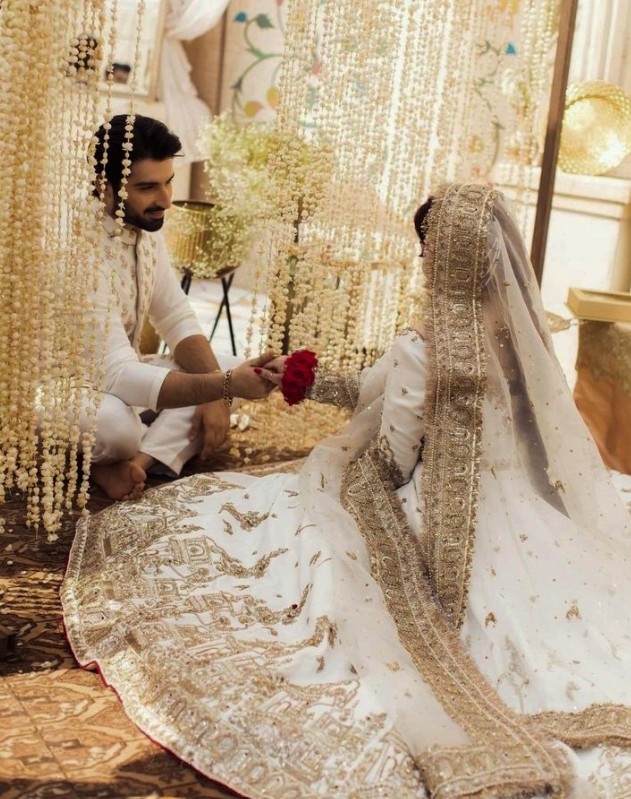
The journey from biodata to background checks is not just about better matchmaking.
It reflects a deeper change in society.
It shows that:
- People value authenticity more than appearance
- Trust must be earned, not assumed
- Compatibility goes beyond surface-level similarities
Marriage media in Gulshan has evolved because people demanded more.
More truth.
More clarity.
More alignment.
And in responding to these demands, it has transformed into something far more meaningful than a matchmaking service.
It has become a guide through one of life’s most important decisions.