






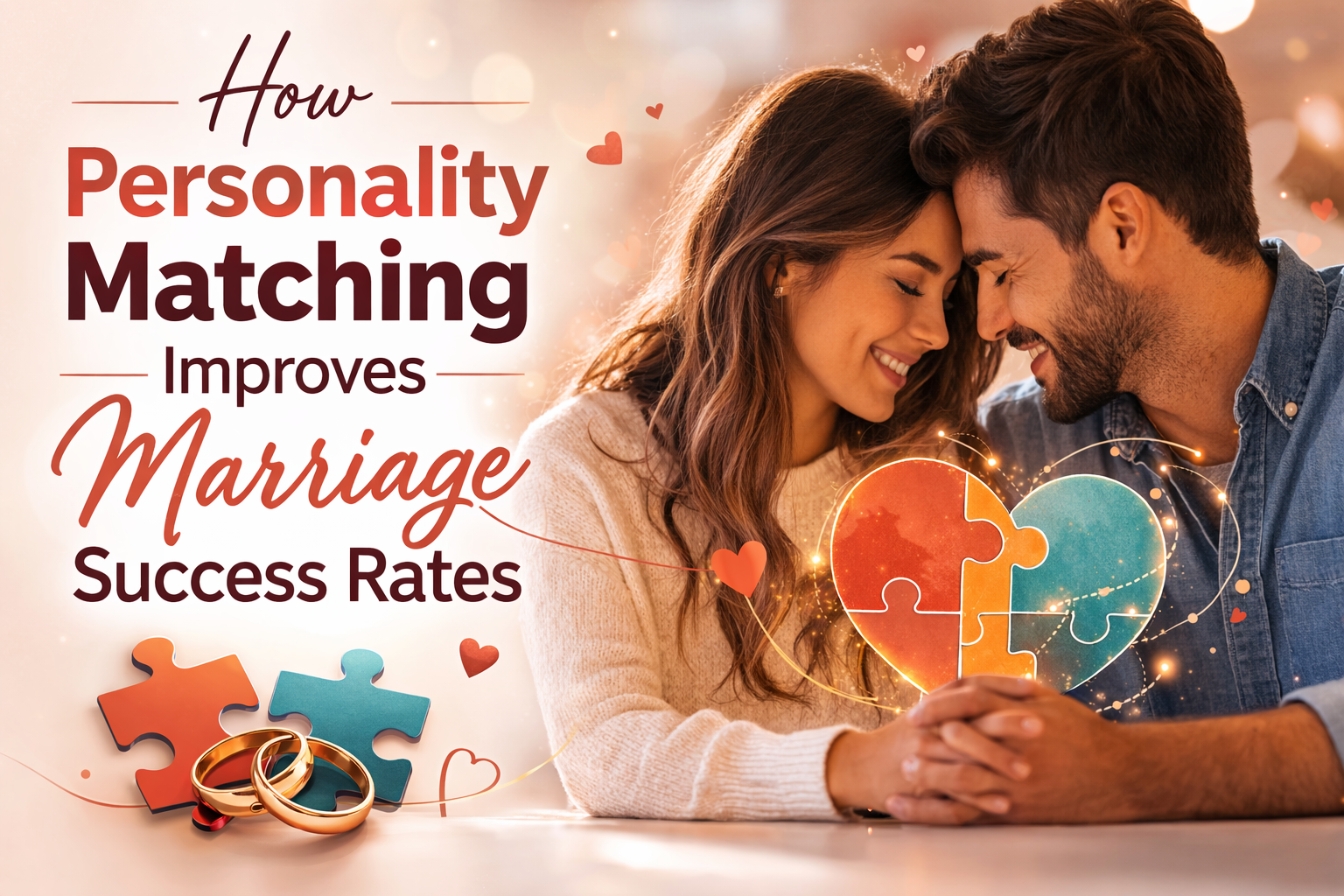
How Personality Matching Improves Marriage Success Rates
Marriage has always been more than just a union between two individuals. It is a long-term partnership that requires emotional understanding, communication, respect, and compatibility. In modern society, especially in urban environments like Dhaka, people are increasingly realizing that personality compatibility is one of the most important factors in determining whether a marriage will succeed or struggle.
For decades, marriages were often arranged based on family background, financial status, religion, or social standing. While these factors still play a role, many families and individuals now recognize that personality matching is equally—if not more—important. Two people may belong to excellent families and share similar educational backgrounds, but if their personalities clash, maintaining a healthy relationship becomes difficult.
Professional matchmaking services, including organizations like Gulshan Marriage Media, have started placing greater emphasis on personality compatibility when introducing potential partners. By understanding how two people think, communicate, and handle life situations, personality-based matchmaking significantly improves the chances of building a successful marriage.
This article explores in detail how personality matching works and why it has become a crucial factor in improving marriage success rates.
Understanding Personality in the Context of Marriage
Personality refers to the combination of emotional patterns, communication styles, attitudes, and behaviors that define how a person interacts with others and responds to life situations. It influences how someone expresses love, deals with conflict, manages responsibilities, and builds relationships.
In marriage, personality affects everyday interactions between partners. From how couples handle disagreements to how they spend their leisure time, personality traits shape the entire relationship dynamic.
For example:
- Some individuals are highly social and outgoing.
- Others prefer quiet environments and smaller social circles.
- Some people are highly structured and organized.
- Others are more flexible and spontaneous.
None of these traits are inherently good or bad. However, compatibility between these traits determines how smoothly two individuals can live together.
When personalities complement or balance each other, relationships tend to become more stable and supportive.
Why Personality Compatibility Matters in Marriage
A successful marriage requires more than romantic attraction or family approval. Couples need to navigate countless life situations together, including financial decisions, family responsibilities, career challenges, and emotional struggles.
Personality compatibility helps couples manage these situations more effectively.
- Better Communication
Communication is the backbone of any healthy relationship. When two individuals have compatible communication styles, they can express their feelings openly and understand each other more easily.
For instance, if both partners value honest discussions and emotional openness, misunderstandings are less likely to escalate into major conflicts.
On the other hand, if one partner prefers direct communication while the other tends to avoid confrontation, unresolved issues may accumulate over time.
Personality matching helps identify communication styles early, allowing couples to build stronger emotional connections.
- Reduced Conflict in Daily Life
Every marriage faces disagreements. However, personality compatibility often determines how frequently conflicts occur and how easily they are resolved.
When partners share similar approaches to problem-solving and emotional expression, they are more likely to resolve disagreements calmly.
For example:
- Two highly analytical individuals may prefer discussing problems logically.
- Two emotionally expressive individuals may focus on sharing feelings openly.
Incompatible personality traits can sometimes lead to misunderstandings or emotional frustration. Personality matching reduces these risks by pairing individuals who are naturally aligned in their responses to stress and conflict.
- Emotional Support and Understanding
Marriage is not only about sharing responsibilities but also about providing emotional support during difficult times. Personality compatibility helps partners understand each other’s emotional needs.
Some individuals require frequent emotional reassurance, while others value independence and personal space. When partners recognize and respect these needs, the relationship becomes more balanced.
Personality matching ensures that emotional expectations are realistic and mutually supportive.
- Shared Lifestyle Preferences
Lifestyle compatibility is another major factor in long-term marital satisfaction. Personality influences how people prefer to spend their time, manage their homes, and interact with their social environments.
For example:
- Some individuals enjoy frequent social gatherings and travel.
- Others prefer quiet evenings at home with close family members.
If partners have extremely different lifestyle preferences, conflicts may arise regarding social activities, personal time, and family commitments.
By considering personality traits during the matchmaking process, couples can find partners whose lifestyle preferences align with their own.
- Long-Term Relationship Stability
Research in relationship psychology consistently shows that compatibility contributes significantly to long-term relationship stability.
When partners feel understood and emotionally connected, they are more likely to remain committed during difficult periods.
Personality compatibility helps couples:
- Maintain emotional closeness
- Handle stress effectively
- Support each other’s personal growth
- Build long-term trust
As a result, marriages based on personality compatibility often demonstrate greater resilience.
Common Personality Traits That Influence Marriage Success
Several personality characteristics play important roles in determining relationship compatibility.
Emotional Stability
Individuals who can manage stress and emotions effectively tend to build more stable relationships. Emotional stability allows couples to address conflicts calmly without escalating disagreements.
Openness to Communication
People who are willing to express their thoughts and listen to their partners’ perspectives tend to maintain stronger relationships.
Responsibility and Reliability
Marriage involves shared responsibilities. Partners who are dependable and organized contribute to a balanced household.
Empathy and Compassion
Understanding a partner’s emotional state helps create deeper emotional intimacy. Empathy encourages supportive behavior during challenging situations.
Adaptability
Life circumstances change over time. Individuals who are flexible and adaptable can adjust to new challenges more easily, reducing relationship strain.
Personality Differences: Complementary vs Conflicting
Not all personality differences are harmful. In fact, many successful marriages involve partners with complementary traits.
For example:
- One partner may be highly organized, while the other brings creativity and spontaneity.
- One may be more extroverted, helping the couple maintain social connections.
- The other may prefer stability and thoughtful decision-making.
These differences can enrich the relationship if both partners respect and appreciate each other’s strengths.
However, extreme differences in values, communication styles, or emotional responses can create ongoing tension. Personality matching aims to identify balanced combinations that encourage cooperation rather than conflict.
The Role of Matchmaking Services in Personality Matching
Traditional matchmaking often relied heavily on family background, education, or financial stability. While these factors remain important, modern matchmaking services increasingly incorporate psychological and personality insights.
Professional matchmakers spend time understanding clients’ personalities, lifestyles, and expectations before recommending potential partners.
Services like Gulshan Marriage Media aim to connect individuals who share compatible values and personalities, rather than simply matching basic demographic information.
This approach significantly improves the likelihood that two individuals will build a harmonious relationship.
Personality Matching vs Superficial Compatibility
Many people initially focus on external qualities when searching for a partner, such as physical appearance, income level, or professional status.
While these factors may influence first impressions, they do not necessarily guarantee long-term happiness.
Personality compatibility, on the other hand, directly affects everyday interactions within a marriage.
Couples who prioritize personality compatibility often experience:
- Deeper emotional intimacy
- Greater mutual respect
- Stronger communication
- Long-term relationship satisfaction
Over time, these qualities become far more valuable than superficial similarities.
Cultural Changes and the Growing Importance of Personality Matching
In cities like Dhaka, social attitudes toward marriage are evolving rapidly. Educated professionals increasingly seek relationships based on emotional compatibility rather than purely traditional considerations.
Several factors contribute to this shift:
Higher Education Levels
Educated individuals often prioritize emotional intelligence, communication, and mutual understanding in relationships.
Career-Oriented Lifestyles
Busy professionals require partners who understand career pressures and respect work-life balance.
Greater Awareness of Relationship Psychology
Modern couples are more aware of how personality traits influence long-term relationship success.
These social changes have made personality matching a central component of contemporary matchmaking services.
Challenges in Identifying Personality Compatibility
Despite its importance, identifying personality compatibility can sometimes be challenging.
Individuals may present themselves differently during early interactions, and some personality traits only become visible over time.
To address this challenge, successful matchmaking processes often involve:
- In-depth conversations about values and expectations
- Observations of communication styles
- Discussions about long-term goals and lifestyle preferences
These steps help ensure that personality compatibility is evaluated carefully before a match is finalized.
How Couples Can Strengthen Personality Compatibility After Marriage
Even when personality matching is considered during matchmaking, couples still need to nurture their relationship actively.
Successful marriages involve continuous effort and mutual understanding.
Some strategies include:
Practicing Active Listening
Listening attentively to a partner’s perspective helps prevent misunderstandings.
Respecting Individual Differences
Recognizing that no two individuals are identical encourages patience and acceptance.
Building Shared Experiences
Spending quality time together strengthens emotional bonds and reinforces compatibility.
Maintaining Open Communication
Honest discussions about expectations and concerns help couples navigate challenges together.
The Future of Personality-Based Matchmaking
As society becomes more aware of the psychological aspects of relationships, personality-based matchmaking is expected to grow in popularity.
Advanced matchmaking services may incorporate personality assessments, lifestyle analysis, and relationship counseling to improve compatibility between partners.
This shift reflects a broader understanding that marriage success depends not only on external circumstances but also on emotional and psychological harmony.
For individuals seeking meaningful and lasting relationships, personality matching provides a more thoughtful and effective approach to finding a life partner.
Marriage is a lifelong partnership that requires emotional connection, mutual respect, and effective communication. While traditional factors such as family background and education remain important, personality compatibility plays a critical role in determining long-term relationship success.
By understanding how individuals think, communicate, and respond to life challenges, personality matching helps create stronger and more harmonious relationships. Couples who share compatible emotional styles, communication patterns, and lifestyle preferences are better equipped to navigate the complexities of married life.
Modern matchmaking services increasingly recognize the importance of personality compatibility when introducing potential partners. By prioritizing deeper psychological understanding rather than superficial similarities, these services help individuals build relationships based on genuine compatibility.
Ultimately, a successful marriage is not simply about finding someone who meets certain social expectations—it is about finding someone whose personality aligns with your own in ways that foster trust, support, and long-term happiness.
When personality compatibility becomes a central focus in the matchmaking process, the chances of building a stable, fulfilling, and lasting marriage increase significantly.
How Personality Matching Improves Marriage Success Rates (Extended Discussion)
The Psychological Foundation of Personality Matching
To understand why personality matching improves marriage success rates, it is important to explore the psychological foundation behind human relationships. Every individual carries a unique emotional framework shaped by upbringing, education, culture, and personal experiences. These elements together form the person’s personality.
When two individuals enter marriage, their personalities interact in multiple ways. Sometimes these interactions create harmony, while other times they produce tension. Personality matching focuses on identifying the emotional and behavioral patterns that naturally align between two individuals.
Psychologists have long emphasized that long-term relationships succeed when partners share compatible emotional responses and expectations. When personalities complement each other, couples tend to experience fewer misunderstandings and develop stronger emotional bonds.
For example, a person who values emotional openness may feel neglected if their partner avoids expressing feelings. However, when both partners share similar emotional communication styles, they naturally support each other.
Personality matching therefore serves as a foundation for emotional stability within marriage.
The Role of Self-Awareness in Personality Compatibility
One of the most overlooked aspects of personality matching is self-awareness. Before individuals can find compatible partners, they must first understand their own personalities.
Self-awareness involves recognizing one’s emotional strengths, communication habits, and personal limitations. Individuals who understand themselves better are more likely to choose partners who complement their personalities.
For instance, someone who knows they prefer calm environments may seek a partner who shares similar preferences rather than someone who constantly seeks social excitement.
Matchmaking services that emphasize personality matching often encourage individuals to reflect on questions such as:
- What type of communication style makes you comfortable?
- How do you usually handle stress or disagreements?
- Do you prefer structured routines or spontaneous lifestyles?
- How important is emotional expression in your relationships?
These reflections help individuals identify personality traits that would best complement their own.
How Personality Matching Prevents Long-Term Dissatisfaction
Many marriages that initially appear ideal eventually face difficulties because deeper personality differences emerge after the wedding. Couples may discover that they have fundamentally different expectations regarding family roles, communication styles, or emotional needs.
Personality matching helps reduce this risk by addressing potential differences early.
For example, one partner may value independence and personal freedom, while the other expects constant companionship and shared activities. Without understanding these expectations beforehand, the relationship may gradually become strained.
Personality-based matchmaking attempts to prevent such mismatches by ensuring that partners share compatible expectations regarding lifestyle and emotional engagement.
This proactive approach significantly reduces the likelihood of long-term dissatisfaction.
Personality Matching and Conflict Resolution
Conflict is a natural part of any relationship. However, the way couples handle disagreements determines whether conflicts strengthen or weaken their relationship.
Personality traits strongly influence conflict resolution styles. Some individuals prefer calm discussions and logical analysis, while others react emotionally and seek immediate reassurance.
When partners have compatible conflict-resolution styles, disagreements are more likely to lead to constructive conversations rather than emotional breakdowns.
For instance:
A calm and patient communicator may work well with a partner who values thoughtful discussions. Together, they can address problems logically and respectfully.
On the other hand, if one partner prefers direct confrontation while the other avoids difficult conversations entirely, unresolved issues may accumulate over time.
Personality matching therefore helps couples develop healthier conflict-management patterns.
The Influence of Personality on Family Relationships
Marriage does not occur in isolation. It involves interaction between two families, especially in cultures where family involvement remains significant.
Personality traits often influence how individuals interact with extended family members. Some people are naturally diplomatic and adaptable, making it easier for them to build positive relationships with in-laws. Others may be more private or independent, preferring minimal family involvement.
Personality compatibility between spouses helps couples navigate these family dynamics more smoothly. When both partners share similar attitudes toward family responsibilities and boundaries, they are better able to support each other.
For example, if both partners value family gatherings and traditions, they will likely enjoy participating in family events together. Conversely, if both prefer maintaining personal space, they may establish balanced boundaries that suit both families.
Personality matching therefore helps couples align their approach to family relationships.
Personality Matching in Professional and Career-Oriented Marriages
In modern cities such as Dhaka, many individuals pursue demanding careers that require long working hours and significant professional commitment. In such circumstances, personality compatibility becomes even more important.
Career-oriented individuals often require partners who understand the pressures of professional life. A partner who appreciates ambition and respects work commitments can provide valuable emotional support.
Personality matching ensures that both partners share similar attitudes toward career priorities. When couples understand each other’s professional goals, they are less likely to experience conflict regarding work schedules or career decisions.
For example, if both partners value career growth and personal development, they are more likely to encourage each other’s ambitions rather than view them as obstacles.
This mutual understanding contributes to a healthier work-life balance within marriage.
The Importance of Emotional Intelligence in Personality Matching
Emotional intelligence refers to the ability to recognize, understand, and manage one’s own emotions as well as the emotions of others.
Couples with high emotional intelligence often experience stronger relationships because they can empathize with each other’s feelings and respond thoughtfully during challenging situations.
Personality matching frequently considers emotional intelligence as an important factor in compatibility.
Partners who demonstrate empathy, patience, and understanding are more capable of maintaining emotional harmony within marriage.
For example, when one partner experiences stress or frustration, an emotionally intelligent spouse will offer support rather than react defensively.
Over time, this emotional awareness strengthens trust and deepens the bond between partners.
Personality Matching and Shared Life Goals
Another critical aspect of compatibility involves alignment of long-term life goals.
Marriage often involves planning for major life decisions such as:
- Career development
- Financial management
- Parenting
- Lifestyle preferences
- Personal growth
Personality traits influence how individuals approach these decisions. Some people prioritize stability and long-term planning, while others prefer flexibility and exploration.
When partners share similar visions for the future, they are more likely to cooperate effectively in achieving their goals.
Personality matching helps identify whether two individuals share compatible aspirations for their lives together.
The Role of Patience and Adaptation in Personality Compatibility
Even when two personalities are highly compatible, marriage still requires patience and adaptability.
Human beings evolve over time. Life experiences, career changes, and personal growth may gradually influence personality traits.
Successful couples recognize that compatibility is not a static condition but a dynamic process that requires continuous understanding and adjustment.
Personality matching provides a strong starting point for a relationship, but maintaining compatibility requires ongoing effort from both partners.
Couples who communicate openly and support each other’s development are more likely to sustain long-term harmony.
How Modern Matchmaking Services Apply Personality Matching
Modern matchmaking services increasingly use structured methods to evaluate personality compatibility. Rather than relying solely on demographic information, professional matchmakers focus on understanding clients as individuals.
This process may include:
- Detailed discussions about personal values
- Evaluating communication styles
- Understanding lifestyle preferences
- Identifying emotional expectations
By collecting this information, matchmakers can introduce potential partners who are more likely to connect on a deeper level.
This approach contrasts with traditional matchmaking methods that often prioritized external factors such as family status or financial stability.
Personality-based matchmaking reflects a growing recognition that emotional compatibility is essential for long-term relationship success.
The Impact of Technology on Personality-Based Matchmaking
Technology has also played an important role in advancing personality-based matchmaking.
Many modern matchmaking platforms incorporate psychological questionnaires and compatibility algorithms designed to identify personality traits.
These tools analyze patterns in communication preferences, emotional responses, and lifestyle choices to suggest compatible partners.
While technology cannot replace human intuition entirely, it can enhance the matchmaking process by providing deeper insights into personality compatibility.
Professional matchmaking services often combine technological analysis with human judgment to achieve more accurate matches.
Cultural Perspectives on Personality Matching
In many cultures, marriage has historically been viewed as a union between families rather than individuals. While family involvement remains important, cultural attitudes toward marriage are gradually evolving.
Young professionals today often seek partners who understand their ambitions, personal values, and emotional needs.
Personality compatibility has therefore become a significant factor in marriage decisions.
Families also increasingly recognize that emotional harmony between partners contributes to a stable and happy household.
This cultural shift has encouraged the adoption of personality-based matchmaking practices.
Signs of Strong Personality Compatibility in Marriage
Couples with strong personality compatibility often display several positive characteristics.
They communicate openly and feel comfortable discussing personal thoughts and concerns. They respect each other’s differences and approach disagreements with patience rather than hostility.
They also enjoy spending time together because their interests and lifestyles naturally align.
Perhaps most importantly, they support each other’s personal growth rather than feeling threatened by it.
These qualities create an environment where both partners feel valued and understood.
When Personality Differences Can Strengthen a Marriage
While compatibility is important, complete similarity between partners is not always necessary. In fact, certain personality differences can enrich a relationship.
For example, an optimistic partner may help a more cautious spouse view challenges with greater confidence. Similarly, a detail-oriented partner may balance a spouse who prefers broader perspectives.
These complementary differences can create balance within the relationship when both partners appreciate each other’s strengths.
Personality matching therefore focuses not only on similarity but also on identifying differences that can contribute positively to the partnership.
Advice for Individuals Seeking Personality-Compatible Partners
Individuals searching for life partners can improve their chances of finding compatible matches by focusing on several key principles.
First, they should prioritize honest self-reflection. Understanding one’s own personality traits helps clarify what qualities would complement them in a partner.
Second, they should engage in meaningful conversations with potential partners about values, communication styles, and life goals.
Third, they should avoid making decisions based solely on superficial qualities such as appearance or social status.
Finally, they should remain open-minded and patient throughout the matchmaking process.
Finding a truly compatible partner often requires time and thoughtful consideration.
The Long-Term Benefits of Personality-Based Marriages
Marriages built on personality compatibility often experience several long-term advantages.
Couples tend to develop stronger emotional connections because they understand each other’s needs and communication styles.
They also experience greater relationship satisfaction because their expectations align naturally.
In addition, personality-compatible couples often demonstrate greater resilience during difficult periods. Their mutual understanding allows them to support each other effectively when facing challenges.
These benefits contribute to a more stable and fulfilling marital relationship.
Final Thoughts

Personality matching has become one of the most important factors in determining marriage success in the modern world. While traditional elements such as family background, education, and financial stability remain relevant, emotional and psychological compatibility now play an equally vital role.
Understanding personality traits helps individuals choose partners who share similar communication styles, emotional needs, and life goals. This alignment significantly reduces conflict and enhances long-term relationship satisfaction.
As society becomes more aware of the psychological dimensions of relationships, personality-based matchmaking will likely continue to grow in importance.
For individuals seeking meaningful and lasting marriages, focusing on personality compatibility provides a thoughtful and effective approach to building strong, supportive partnerships that stand the test of time.