






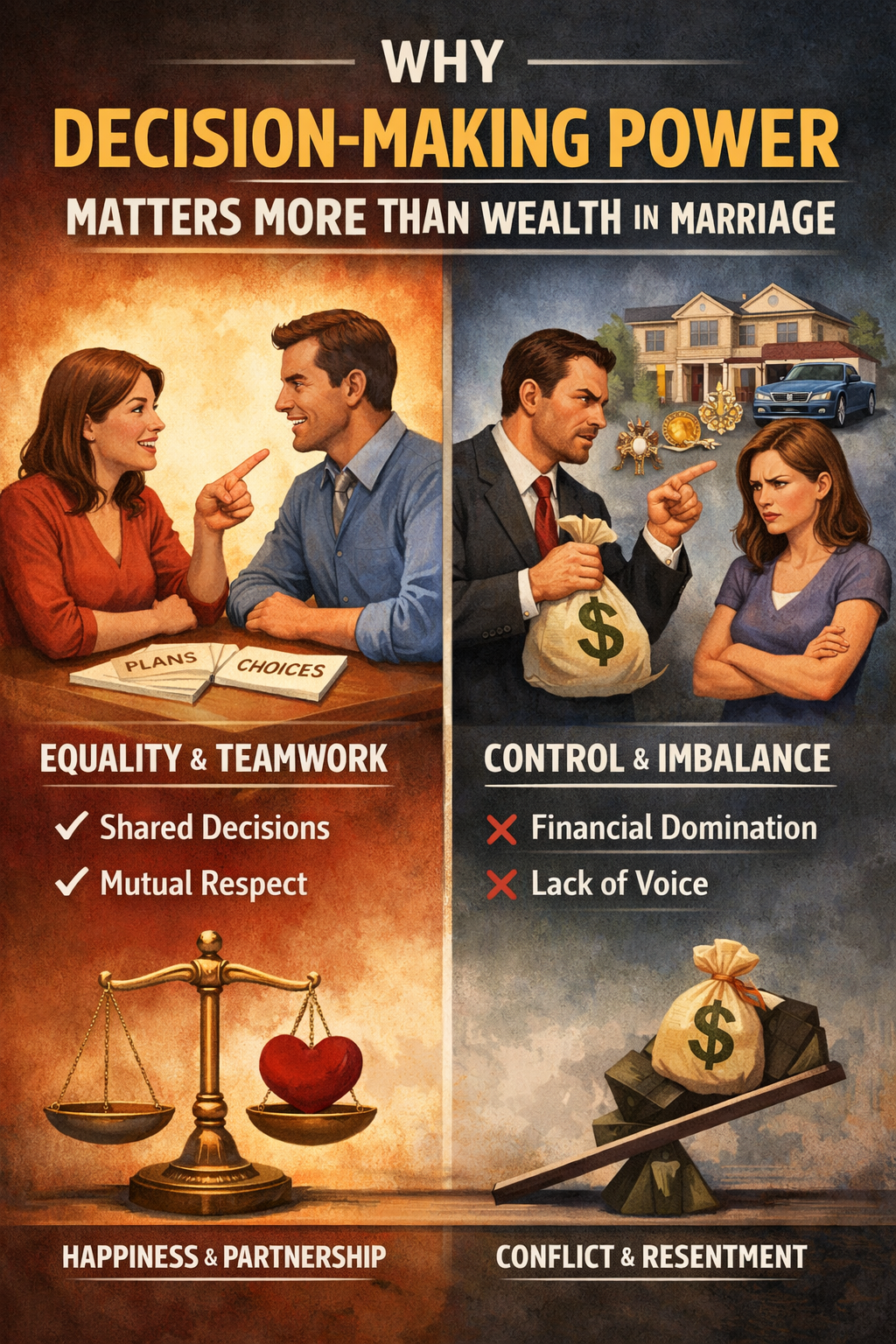
Why Decision-Making Power Matters More Than Wealth in Marriage
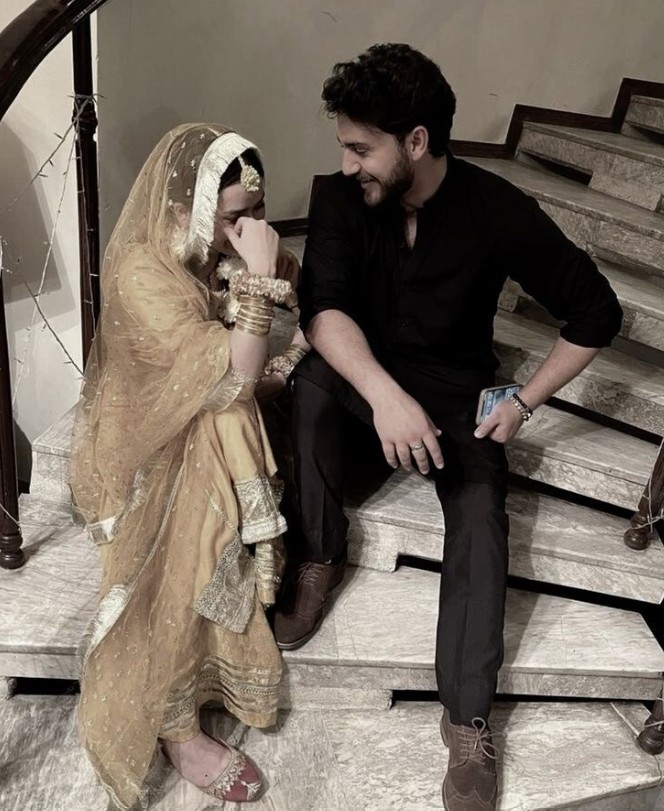
Marriage discussions in affluent communities often begin with numbers. Income. Property. Business valuation. Educational degrees. Family assets. In areas like Gulshan and Banani, conversations frequently revolve around status indicators that appear impressive on paper. Wealth becomes the visible benchmark of “suitability.”
Yet, behind closed doors, many marriages that looked financially perfect struggle with something far more fundamental: decision-making power.
Who makes the final call?
Who controls life choices?
Who has the authority to say yes or no?
Whose voice carries weight in times of crisis?
Over time, families quietly realize that money alone does not determine the health of a marriage. The real foundation lies in how decisions are made — and who is empowered to make them.
This blog explores why decision-making power matters more than wealth in marriage, especially in high-standard, status-conscious environments.
The Illusion of Financial Security
Wealth gives comfort. It creates opportunity. It reduces stress in many practical areas of life. But it does not automatically create harmony.
A couple may have:
- A beautiful apartment.
- A thriving family business.
- International travel.
- Social recognition.
Yet if one partner has no say in decisions — about career, relocation, finances, children, or even daily matters — resentment slowly grows.
Financial stability can provide a lifestyle.
Decision-making power determines dignity.
And dignity sustains relationships.
What Is Decision-Making Power in Marriage?
Decision-making power is not about domination. It is not about controlling the other person. Instead, it reflects:
- Autonomy
- Mutual respect
- Emotional authority
- Equal voice in important matters
In healthy marriages, both individuals feel heard. Even when disagreements arise, neither partner feels invisible.
When decision-making power is unequal, the imbalance may not show immediately. But over time, it becomes the silent source of conflict.
Wealth Without Voice: A Common Reality
In many arranged marriages within elite circles, wealth is prioritized during evaluation. Questions often include:
- How much does he earn?
- How established is the family business?
- What properties do they own?
- What is their social circle?
Rarely do families ask:
- How does he handle disagreements?
- Does she have freedom to make independent choices?
- How are financial decisions made at home?
- Who influences final decisions — parents, siblings, or the couple?
When voice and authority are ignored during selection, wealth cannot compensate later.
Financial Power vs Emotional Power
Financial power gives leverage.
Emotional power gives connection.
A wealthy partner who dominates decisions can create a relationship dynamic where the other partner feels like a guest rather than an equal.
For example:
A bride from a modest but respectable background marries into a very wealthy household. On paper, it seems like an upgrade. However:
- She cannot choose where to live.
- She cannot influence business involvement.
- She cannot pursue further education without approval.
- She cannot express discomfort openly.
Over time, comfort turns into quiet frustration.
Marriage becomes a luxurious cage.
The Psychology Behind Decision-Making Control
Control in marriage often stems from:
- Upbringing
- Cultural conditioning
- Family hierarchy
- Ego tied to income
- Fear of losing authority
In some affluent families, wealth is linked to identity. The person who generates more income may subconsciously believe they deserve more control.
But control does not create respect. It creates distance.
True respect emerges when both partners feel empowered.
When Wealth Creates Imbalance
Wealth can unintentionally distort power dynamics in three key ways:
- Economic Dependency
If one partner has no independent financial footing, their opinions may be dismissed more easily.
- Family Influence
In established business families, major decisions are often influenced by elders. The couple may have limited independent authority.
- Social Pressure
Maintaining status may become more important than personal happiness, reducing open communication.
In such cases, money becomes a wall rather than a bridge.
Decision-Making as a Sign of Maturity
A person’s ability to share decision-making reflects emotional maturity.
A mature spouse:
- Listens actively.
- Considers their partner’s perspective.
- Allows disagreement without punishment.
- Makes joint financial plans.
- Shares long-term vision.
An immature spouse:
- Uses income as leverage.
- Avoids discussion.
- Makes unilateral decisions.
- Silences opposition.
- Seeks validation from outsiders instead of their partner.
Wealth does not guarantee maturity.
The Silent Struggles in Elite Marriages
In upscale communities, divorces are often avoided publicly. Instead, couples maintain appearances.
Behind perfect photographs:
- Communication may be minimal.
- Decisions may be dictated.
- Emotional distance may grow.
The outside world sees luxury.
Inside, there may be loneliness.
Decision-making power determines whether a spouse feels like a partner or an accessory.
Why Modern Brides Value Authority
Today’s educated brides, especially professionals, seek more than financial comfort.
They look for:
- Partnership.
- Intellectual equality.
- Respect in discussions.
- Freedom to continue career.
- Involvement in investment decisions.
They are no longer satisfied with just “security.”
They want significance.
Similarly, modern grooms also seek wives who can think independently and contribute meaningfully to decisions.
Marriage is evolving from hierarchy to collaboration.
Wealth Can Disappear. Power Dynamics Remain.
Markets fluctuate. Businesses fail. Economic downturns happen.
If a marriage is built only on wealth, crisis exposes weakness.
But if a marriage is built on shared decision-making:
- The couple adapts together.
- They plan strategically.
- They support each other.
- They rebuild as a team.
Joint authority creates resilience.
Decision-Making During Conflict
Every marriage faces conflict. The difference lies in:
- Are conflicts discussed?
- Or are they imposed?
In unequal power structures, one partner decides, the other accepts.
In balanced marriages:
- Disagreements are processed.
- Solutions are negotiated.
- Compromises are mutual.
Conflict resolution reveals the true structure of power.
The Role of Families in Power Distribution
In arranged marriages, family dynamics significantly affect authority.
Questions worth considering before marriage:
- Will the couple have independent living space?
- Who handles financial control?
- How are business responsibilities shared?
- Does the bride have input in household decisions?
- Are elders open to discussion?
Ignoring these aspects can create future dissatisfaction, even in wealthy environments.
Status vs Stability
Status impresses society.
Stability sustains marriage.
Stability requires:
- Transparent communication.
- Shared planning.
- Emotional intelligence.
- Balanced authority.
A financially average couple with balanced decision-making may experience deeper satisfaction than a wealthy couple with rigid hierarchy.
The Ego Factor
Ego is often tied to income, education, and social status.
When ego dominates:
- Listening decreases.
- Cooperation weakens.
- Defensive behavior increases.
Decision-making becomes a battlefield rather than a dialogue.
Marriages survive on humility, not hierarchy.
Empowerment Creates Attraction
Long-term attraction is influenced by respect.
When a spouse feels:
- Valued
- Consulted
- Trusted
- Acknowledged
Love deepens.
When a spouse feels:
- Controlled
- Ignored
- Overruled
- Secondary
Emotional withdrawal begins.
No amount of wealth can reverse emotional detachment once it settles in.
The New Definition of “Successful Marriage”
Success is no longer measured only by:
- Property
- Cars
- Business scale
- Social invitations
It is measured by:
- Peace at home
- Freedom to speak
- Mutual admiration
- Shared responsibility
Decision-making power plays a central role in all of these.
Before Saying Yes: Questions That Matter
Instead of focusing solely on income, families should consider asking:
- How are disagreements handled?
- Does he/she respect independent opinions?
- Is there space for career growth after marriage?
- How are financial plans discussed?
- What level of independence will the couple have?
These questions reveal far more about future happiness than bank statements.
Marriage as Partnership, Not Position
Marriage is not a corporate structure. It is not a boardroom where one CEO dominates.
It is a partnership.
Partnership requires:
- Equality in dignity.
- Shared authority.
- Transparent decision-making.
- Emotional cooperation.
Wealth can enhance life.
Power balance protects it.
Final Reflection
Money creates comfort.
Decision-making creates confidence.
Money builds houses.
Decision-making builds homes.
Money attracts proposals.
Decision-making sustains commitment.
In today’s evolving social landscape, especially within affluent communities, families are slowly recognizing that financial strength without shared authority leads to fragile foundations.
When choosing a life partner, ask not only:
“How much does he earn?”
But also:
“How does he decide?”
Not only:
“How wealthy is the family?”
But also:
“How are voices heard within the family?”
Because at the end of the day, wealth may decorate a marriage — but decision-making power defines it.
Why Decision-Making Power Matters More Than Wealth in Marriage
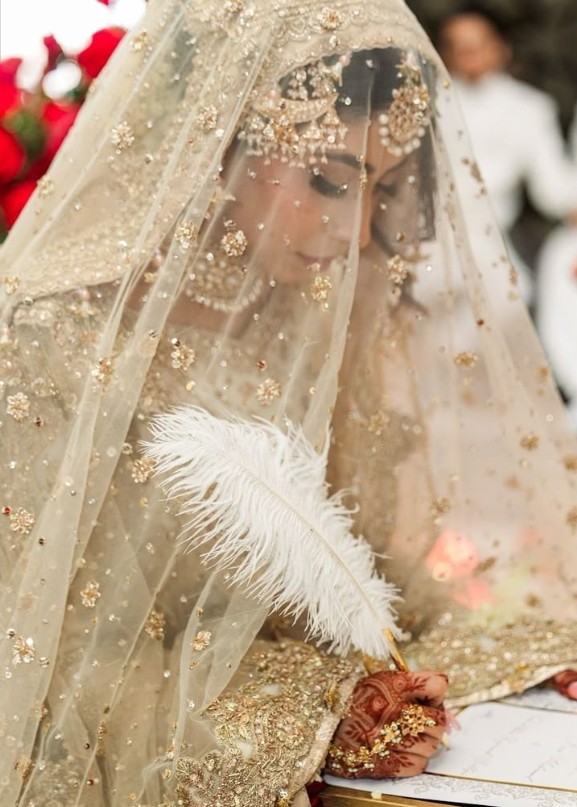
In upscale residential zones like Gulshan, Banani, and Baridhara, marriage discussions often unfold in elegant living rooms. Tea is served. Credentials are exchanged. Business portfolios are evaluated. Family names are mentioned with pride.
Everything appears organized. Structured. Strategic.
But behind the formality lies one invisible variable that determines whether the marriage will flourish or silently fracture:
Who truly holds decision-making power after the wedding?
Because once the lights dim, the guests leave, and the wedding album is placed on a shelf, everyday life begins. And everyday life is nothing but a series of decisions.
Where to live.
How to manage money.
When to have children.
Which career opportunities to accept.
How to respond to conflict.
How much influence parents will maintain.
Wealth may ease logistics — but it does not automatically equalize authority.
The Silent Architecture of a Marriage
Every marriage has an invisible architecture. It is not made of concrete or marble, but of power distribution.
In some marriages:
- Decisions are shared.
- Discussions are respected.
- Final calls are mutually agreed upon.
In others:
- One partner speaks.
- The other adapts.
- Silence replaces disagreement.
From the outside, both marriages may look equally successful. The difference only becomes visible over time.
Wealth decorates the exterior.
Decision-making shapes the structure.
The Myth That Money Automatically Brings Stability
There is a common assumption in affluent societies:
“If financial security exists, emotional problems will be manageable.”
This belief often leads families to prioritize:
- Net worth
- Business stability
- Educational pedigree
- Social influence
But stability is not the absence of financial stress. Stability is the presence of balanced authority.
A wealthy household where one partner feels voiceless is emotionally unstable — even if financially comfortable.
Decision-Making in Daily Life: The Real Test
Major decisions get attention — property purchases, international relocations, business investments.
But what about smaller, daily decisions?
- What school will the children attend?
- Can she continue working after childbirth?
- Will he reduce work hours for family balance?
- How often will extended family visit?
- How are vacations planned?
Daily decision patterns reveal the real power structure.
If one partner constantly adjusts while the other rarely compromises, imbalance slowly erodes respect.
The Gender Evolution in Modern Marriages
The dynamics of decision-making have transformed significantly over the past decade.
Educated, financially aware women no longer view marriage as economic dependence. Many brides today:
- Have their own income.
- Hold advanced degrees.
- Maintain professional networks.
- Possess independent ambitions.
Similarly, modern grooms increasingly seek:
- Emotionally intelligent partners.
- Educated equals.
- Independent thinkers.
This shift challenges traditional power hierarchies.
When two capable individuals marry, the expectation of shared authority becomes stronger.
And if one side attempts dominance, conflict emerges quickly.
Wealth Can Mask Control
Control in affluent households is often subtle.
It may not appear as shouting or aggression. Instead, it may look like:
- “This is how our family always does things.”
- “You don’t need to worry about finances.”
- “Trust me, I know better.”
- “This decision is already made.”
Over time, these phrases accumulate.
The partner being sidelined may initially accept it out of respect. But repeated exclusion creates emotional detachment.
The problem with wealth-based control is that it appears generous.
When someone says, “I’ll handle everything,” it can feel protective.
But protection without participation becomes restriction.
Decision-Making and Identity
Marriage is not just a union of families. It is a merging of identities.
If one identity consistently dominates, the other slowly dissolves.
When a spouse cannot:
- Express disagreement.
- Suggest alternatives.
- Influence financial planning.
- Shape family culture.
They begin to lose a sense of self.
Wealth cannot restore identity once it feels diminished.
The Psychological Impact of Power Imbalance
Long-term power imbalance leads to:
- Decreased confidence.
- Emotional withdrawal.
- Passive communication.
- Internal resentment.
- Reduced intimacy.
Interestingly, many couples with unequal authority do not openly fight.
They simply stop engaging.
And disengagement is more dangerous than conflict.
Because conflict indicates involvement.
Disengagement signals emotional exit.
Crisis as the Ultimate Revealer
When life is smooth, imbalance may remain unnoticed.
But during crisis — health emergencies, financial setbacks, family disputes — the power structure becomes obvious.
In balanced marriages:
- Both partners participate in problem-solving.
- Emotional support is reciprocal.
- Decisions are collaborative.
In imbalanced marriages:
- One partner dictates.
- The other complies.
- Blame may be assigned unilaterally.
Crisis does not create problems. It exposes them.
Financial Contribution vs Decision Contribution
An important misconception is that financial contribution should directly determine decision authority.
But marriage is not a shareholder meeting.
A partner who contributes less financially may:
- Provide emotional stability.
- Manage household efficiency.
- Offer strategic insights.
- Strengthen social bonds.
Decision-making should reflect partnership value — not salary comparison.
The Long-Term Sustainability Question
Ask this question:
Which marriage is more sustainable?
- A wealthy couple where one partner decides everything.
- A moderately wealthy couple where both share authority.
The second structure is more adaptable.
Why?
Because shared decision-making builds:
- Trust
- Communication skills
- Conflict resolution habits
- Emotional safety
These factors outlast financial fluctuations.
Children and Power Modeling
Children observe parental dynamics closely.
If they grow up seeing:
- Mutual respect
- Collaborative planning
- Balanced discussions
They internalize healthy relationship models.
If they grow up seeing:
- One dominant voice
- One silent partner
- Authority without empathy
They replicate those patterns in adulthood.
Decision-making power affects not just the couple — but the next generation.
Social Status vs Emotional Security
In elite circles, maintaining image is often prioritized.
Luxury weddings.
Prestigious venues.
Designer attire.
International honeymoons.
But emotional security cannot be photographed.
Emotional security grows when:
- Opinions are valued.
- Choices are shared.
- Autonomy is protected.
Without emotional security, status becomes performance.
And performance is exhausting.
Why Some Wealthy Marriages Feel Lonely
Loneliness in marriage is not about physical absence.
It is about emotional exclusion.
A spouse may feel lonely even in a mansion if:
- Their perspective is dismissed.
- Their voice carries no weight.
- Their aspirations are ignored.
Decision-making power combats loneliness.
Because participation creates belonging.
The Hidden Negotiation Before Marriage
Families often negotiate:
- Mehr or financial agreements.
- Wedding scale.
- Living arrangements.
But rarely do they negotiate:
“How independent will the couple be?”
“How much involvement will extended family maintain?”
“Will both careers be equally supported?”
“Is relocation mutually decided?”
These silent assumptions later become conflicts.
Transparent discussion before marriage prevents imbalance afterward.
Respect Is Built Through Consultation

One of the simplest ways to show respect is consultation.
Even when a partner is confident in a decision, asking:
“What do you think?”
“Are you comfortable with this?”
“Do you see it differently?”
These questions strengthen unity.
Authority shared is respect multiplied.
Wealth Without Partnership: A Fragile Formula
If wealth becomes the only pillar of the marriage, the structure remains vulnerable.
Because wealth:
- Can fluctuate.
- Can be lost.
- Can create external pressures.
But partnership:
- Deepens over time.
- Strengthens resilience.
- Creates adaptability.
The strongest marriages are not those with the highest bank balances.
They are those with balanced authority and mutual accountability.
Emotional Intelligence and Power Balance
Decision-making is not just logical. It is emotional.
Emotionally intelligent partners:
- Recognize each other’s fears.
- Validate concerns.
- Avoid dismissive language.
- Prioritize harmony over ego.
Power imbalances often stem from emotional insecurity.
A person afraid of losing control may cling to authority.
But true strength lies in shared leadership.
Marriage as a Shared Leadership Model
Think of marriage as a small organization with two leaders.
In effective leadership models:
- Roles are defined.
- Respect is mutual.
- Communication is constant.
- Decisions are strategic and inclusive.
Shared leadership increases success probability.
Marriage operates similarly.
The Red Flags Families Should Notice
Before finalizing a proposal, observe:
- Does he interrupt her frequently?
- Does she hesitate to express disagreement?
- Are major decisions described as “already decided”?
- Is there space for negotiation?
These micro-signals reveal macro-dynamics.
Ignoring them may lead to long-term dissatisfaction.
Empowered Marriages Attract Stability
Couples with balanced power:
- Display confidence.
- Handle social pressure calmly.
- Make decisions aligned with shared goals.
- Adapt without blame.
Their wealth enhances their life — but does not define their structure.
Final Deep Reflection
At first glance, wealth appears measurable. Tangible. Reassuring.
Decision-making power is invisible.
Yet invisible elements often hold the greatest weight.
Air cannot be seen — but without it, life stops.
Respect cannot be touched — but without it, love fades.
Authority balance cannot be displayed — but without it, marriage weakens.
When evaluating a life partner, the question should not only be:
“How successful is he?”
“How wealthy is the family?”
But also:
“Does he listen?”
“Does she participate?”
“Are decisions shared?”
“Is independence respected?”
Because at the end of decades — when youth fades, trends change, markets fluctuate — the couple will rely on their ability to make decisions together.
That skill sustains marriage longer than any financial asset.