



From LinkedIn to Life Partner: Why Professionals Still Choose Marriage Media in Gulshan
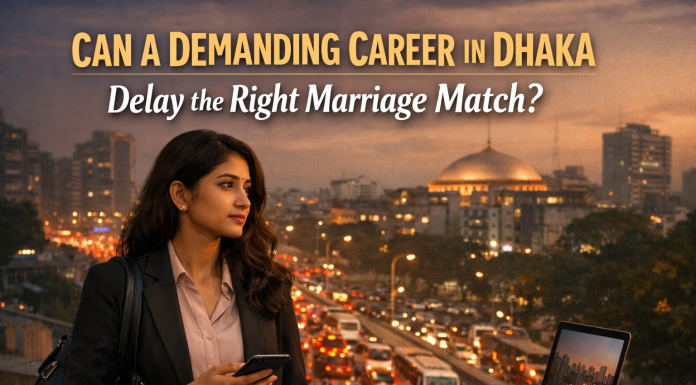
There’s something quietly ironic about modern life in Dhaka. You can build a powerful professional identity with just a few clicks. Your education, your achievements, your career milestones—all neatly organized and visible on platforms like LinkedIn. You can connect with CEOs, entrepreneurs, consultants, and creatives across the world without ever leaving your desk.
And yet, when it comes to finding something far more personal—someone to share your life with—the process becomes uncertain, complicated, and often frustrating.
This is the paradox many professionals in Dhaka, especially those connected to Gulshan’s fast-paced lifestyle, are experiencing. They are confident in boardrooms, decisive in business, and strategic in career moves. But when it comes to marriage, they hesitate. Not because they don’t want it—but because they don’t know where to look for something real.
Interestingly, many of them are not turning to dating apps or casual social connections. Instead, they are choosing something more structured, more intentional, and surprisingly more aligned with their needs: marriage media.
This shift is not accidental. It reflects a deeper change in how professionals think about relationships, commitment, and the value of time.
The Illusion of Endless Options
At first glance, modern professionals seem to have more opportunities than ever to meet potential partners. Offices are diverse, social circles are wide, and online platforms offer access to countless profiles. It feels like the possibilities are endless.
But that abundance often creates confusion rather than clarity.
When you are constantly exposed to new people, new conversations, and new possibilities, it becomes harder to focus on one meaningful connection. There is always the thought that something better might be just one more click away. This mindset, while useful in career growth, can be damaging when it comes to relationships.
Professionals in Gulshan often find themselves stuck in this cycle—meeting people, having conversations, but never quite moving forward. The interactions lack direction. The intentions are unclear. And over time, the process becomes emotionally exhausting.
What looks like opportunity from the outside often feels like noise from within.
When Professional Identity Doesn’t Translate Into Personal Clarity
Platforms like LinkedIn are powerful tools. They tell a story of ambition, discipline, and success. But they tell only one part of the story.
A person’s professional identity is not the same as their personal identity.
You can know where someone studied, where they work, and what they have achieved—but still know nothing about how they handle conflict, how they view family, or what they expect from marriage. These are the things that actually determine whether two people can build a life together.
Many professionals initially try to explore connections within their extended networks. A colleague introduces someone. A mutual connection sparks a conversation. It seems natural and convenient.
But very quickly, the limitations become clear.
There is hesitation in expressing personal intentions. There is fear of awkwardness if things don’t work out. There is a lack of structure, which means conversations drift without reaching any real conclusion.
In a professional environment where clarity and efficiency are valued, this ambiguity feels out of place.
The Weight of Expectations
For professionals in areas like Gulshan, marriage is not just a personal decision—it is also a social one.
There are expectations around education, family background, financial stability, and even lifestyle. These expectations are not always unreasonable, but they do add complexity to the process.
A casual connection is rarely enough. There needs to be alignment not just between two individuals, but between two families, two sets of values, and two visions of the future.
Trying to evaluate all of this on your own, through unstructured interactions, can feel overwhelming.
This is one of the reasons why many professionals begin to look for a more guided approach.
The Shift Toward Intentional Platforms
Marriage media offers something that modern platforms often lack: intention.
Everyone who enters the process does so with a clear purpose. They are not there to pass time, seek validation, or explore casual connections. They are there to find a life partner.
This shared intention changes everything.
Conversations become more meaningful because both sides know what they are working toward. Meetings are more focused because there is already a basic level of compatibility. Decisions are easier because the process is structured.
For professionals who are used to goal-oriented environments, this approach feels natural.
It brings a sense of direction to something that often feels uncertain.
Privacy in a Highly Visible World
One of the less discussed but deeply important concerns for professionals is privacy.
In today’s world, personal and professional boundaries are often blurred. A simple interaction on a public platform can become visible to a wide audience. A misunderstanding can spread quickly. A private conversation can become public without warning.
For individuals who have built a reputation in their field, this is not a small risk.
Marriage media operates differently.
It is designed to protect confidentiality. Profiles are shared selectively. Information is handled with care. Interactions take place in a controlled environment.
This allows professionals to explore potential matches without worrying about how it might affect their public image.
In a society where reputation matters, this level of discretion is not just appreciated—it is essential.
Time: The Most Valuable Resource
If there is one thing that defines the life of a professional, it is the constant demand on their time.
Meetings, deadlines, travel, responsibilities—it all adds up. Finding time for personal matters becomes a challenge.
And yet, marriage is not something that can be rushed or treated casually. It requires attention, thought, and emotional investment.
This creates a difficult balance.
Marriage media helps by making the process more efficient.
Instead of spending months or even years exploring uncertain connections, individuals are introduced to people who already meet their core criteria. This reduces the time spent on unsuitable matches and allows for more focused interactions.
For someone with a busy schedule, this efficiency can make the difference between endless searching and meaningful progress.
Beyond Surface-Level Compatibility
In many modern interactions, compatibility is often reduced to shared interests—music, travel, food, hobbies.
While these things can help people connect initially, they are not enough to sustain a long-term relationship.
Marriage requires a deeper level of understanding.
It involves aligning on values, expectations, responsibilities, and long-term goals. It requires emotional maturity, mutual respect, and the ability to navigate challenges together.
Marriage media places greater emphasis on these deeper aspects.
It looks at the bigger picture—family background, cultural alignment, life goals, and personal values. This holistic approach increases the chances of finding a partner who is truly compatible, not just temporarily interesting.
The Role of Guidance
One of the most underrated aspects of marriage media is the presence of guidance.
Professionals are used to making decisions independently. They are confident in their judgment. But when it comes to relationships, even the most capable individuals can benefit from perspective.
Matchmakers bring experience. They have seen patterns, understood challenges, and helped many individuals navigate the process.
They can offer insights that might not be obvious from within. They can identify potential issues early. They can facilitate conversations that might otherwise be difficult.
This guidance does not take away control—it enhances it.
It provides support in a process that is both personal and complex.
Balancing Independence and Family Involvement
Modern professionals value independence. They want to make their own choices, shape their own lives, and take responsibility for their decisions.
At the same time, family remains an important part of the equation.
Marriage media creates a space where both of these elements can coexist.
Individuals can take the lead in choosing their partner, while families can be involved in a respectful and structured way. This balance helps avoid conflict and ensures that both personal and collective expectations are considered.
In a society where family dynamics play a significant role, this balance is crucial.
Why Gulshan Stands Out
Gulshan has become more than just a location—it represents a certain way of life.
It is home to professionals who are globally connected, culturally aware, and driven by ambition. Their expectations are shaped by both local traditions and international exposure.
Marriage media services in Gulshan are tailored to this unique audience.
They understand the mindset of professionals. They recognize the importance of discretion. They prioritize quality over quantity.
This alignment creates a more effective and satisfying experience.
It is not just about finding a match—it is about finding the right match.
Changing Perceptions
There was a time when marriage media was seen as a last resort. Something people turned to only when other options failed.
That perception is changing.
Today, many professionals see it as a smart choice. A practical solution to a complex problem. A way to approach marriage with the same level of thought and intention that they apply to other important areas of their life.
This shift in mindset is significant.
It reflects a broader understanding that not all modern solutions are better—and that sometimes, a refined version of a traditional approach can be more effective.
Real Connections in a Structured World
At its core, the appeal of marriage media lies in its ability to create real connections.
In a world filled with distractions, superficial interactions, and endless choices, it offers something rare: focus.
It allows individuals to step away from the noise and engage in a process that is purposeful and grounded.
The conversations are different. The meetings are different. The outcomes are different.
There is a sense of seriousness that encourages honesty, clarity, and commitment.
And for many professionals, this is exactly what they have been looking for.
The Emotional Reality Behind the Decision
Beneath all the practical reasons—time, privacy, efficiency—there is also an emotional layer.
Professionals, despite their confidence and success, experience the same desires as anyone else. They want companionship. They want understanding. They want a sense of stability.
But they also carry certain fears.
The fear of making the wrong choice. The fear of wasting time. The fear of vulnerability in an uncertain process.
Marriage media addresses these fears by providing a structured and supportive environment.
It does not eliminate risk, but it reduces uncertainty.
And sometimes, that is enough to take the first step.
Choosing Intention Over Chance
Finding a life partner has never been a simple task. It requires patience, understanding, and a willingness to invest in something long-term.
For professionals in Dhaka, the challenge is not just finding someone—it is finding someone in a way that aligns with their lifestyle, values, and expectations.
Marriage media in Gulshan offers a solution that is both practical and thoughtful.
It combines the clarity of intention with the depth of traditional values. It respects the realities of modern life while addressing the timeless need for connection.
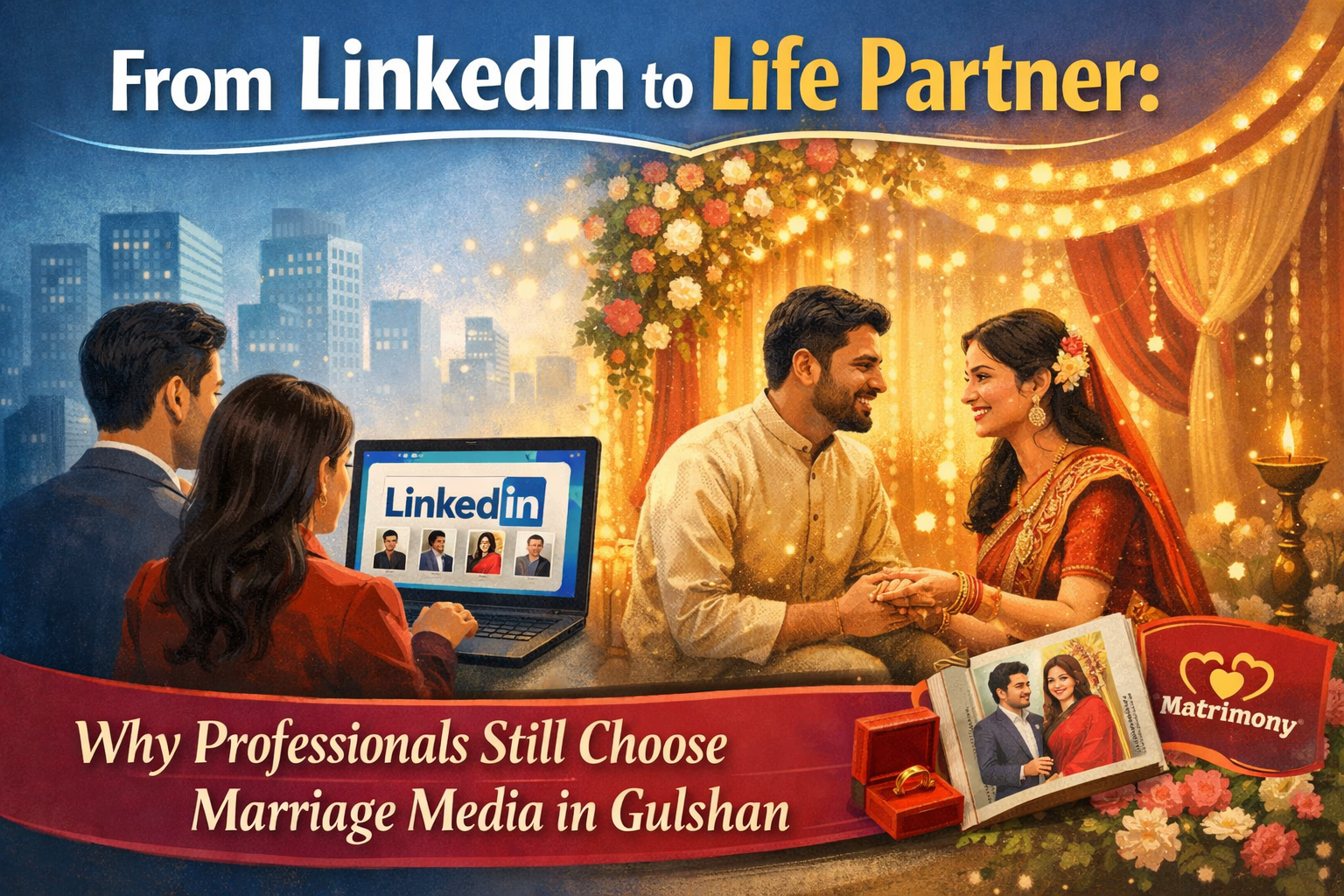
From LinkedIn to life partner, the journey may begin in different places. But for those who choose this path, it is guided not by chance, but by choice.
And in a world full of distractions, that choice can make all the difference.
When Success Delays Simplicity
LinkedIn to Life Partner
There is a quiet pattern that often goes unnoticed in Dhaka’s professional circles. The more successful someone becomes, the more complicated their personal life tends to feel—especially when it comes to marriage.
In the early stages of life, things are relatively simple. There is less pressure, fewer expectations, and a more flexible mindset. But as careers grow, as achievements accumulate, and as lifestyles evolve, the idea of choosing a life partner becomes more layered.
A senior executive, for example, is not just thinking about emotional compatibility. They are thinking about long-term stability, shared values, lifestyle alignment, and even social perception. An entrepreneur may wonder whether their partner will understand the uncertainty and pressure that comes with building something from the ground up. A doctor or consultant may worry about whether someone can adjust to their unpredictable schedule.
These are not superficial concerns. They are deeply practical questions that directly affect the future.
And this is where unstructured platforms often fall short. They don’t provide the depth needed to explore these realities. They encourage quick conversations, not thoughtful evaluations.
Marriage media, on the other hand, creates space for these discussions. It acknowledges that for professionals, marriage is not just about connection—it is also about compatibility in a very real, day-to-day sense.
The Unspoken Fatigue of “Trying”
If you speak honestly with many professionals in Gulshan, you will notice a certain kind of fatigue.
Not physical fatigue—the kind that comes from long work hours—but emotional fatigue.
The fatigue of trying.
Trying to meet people. Trying to keep conversations going. Trying to figure out intentions. Trying to stay hopeful after repeated disappointments.
It’s not that they haven’t made efforts. In fact, many have tried multiple approaches—through friends, social circles, even digital platforms. But over time, the lack of clarity and consistency begins to wear them down.
At some point, the process starts to feel less like an opportunity and more like a burden.
Marriage media offers a different experience.
It removes much of the guesswork. It reduces unnecessary interactions. It creates a pathway where effort is directed toward meaningful possibilities rather than uncertain experiments.
For someone who is already managing a demanding life, this shift can feel like relief.
Why “Seriousness” Is a Rare Quality Today
One of the most common complaints among professionals is surprisingly simple: “People are not serious.”
This doesn’t mean that individuals lack ambition or intelligence. It means that when it comes to relationships, there is often a lack of clarity about intentions.
Someone might be interested in talking, but not ready for commitment. Someone might enjoy the idea of connection, but hesitate when things become real. Someone might present themselves well initially, but reveal inconsistencies over time.
This lack of seriousness creates confusion and frustration.
Marriage media filters this out to a large extent.
Because the platform itself is designed for marriage, it attracts individuals who are already in that mindset. This doesn’t guarantee perfection, but it significantly increases the likelihood of interacting with someone who shares the same goal.
For professionals who value clarity, this makes a huge difference.
The Subtle Importance of Social Compatibility
In a city like Dhaka, social compatibility plays a larger role than people often admit.
It’s not just about whether two individuals get along—it’s also about how their lives fit together in a broader context.
Will their families connect comfortably?
Will their lifestyles align?
Will their social environments complement each other?
These questions may seem secondary, but they often become important after marriage.
Professionals in Gulshan, in particular, are part of a specific social ecosystem. Their work, their networks, their daily routines—all shape their expectations.
Marriage media takes these factors into account.
It doesn’t treat compatibility as a single dimension. It recognizes that a successful marriage requires alignment across multiple layers—personal, familial, and social.
When Independence Meets Responsibility
Modern professionals value independence. They have built their lives through their own efforts. They are used to making decisions, taking risks, and managing outcomes.
But marriage introduces a different kind of responsibility.
It requires compromise. It requires adjustment. It requires the ability to think not just as an individual, but as part of a partnership.
This transition can be challenging.
Many professionals struggle to find someone who understands this balance—someone who respects independence but also embraces shared responsibility.
Marriage media helps facilitate this understanding.
Through structured conversations and guided interactions, it creates opportunities to explore these dynamics early on. It encourages discussions about expectations, roles, and long-term plans.
This reduces the chances of misalignment later.
The Reality of “Too Late” Thinking
Another subtle issue that affects many professionals is the feeling of being “late.”
As careers take priority, marriage is often postponed. Years pass, and suddenly there is a sense of urgency.
But this urgency can create pressure.
Decisions may feel rushed. Expectations may become rigid. The fear of making a mistake may become stronger.
Marriage media provides a more balanced approach.
It acknowledges the urgency without amplifying the pressure. It allows individuals to move forward at a steady pace, with guidance and support.
It shifts the focus from “finding someone quickly” to “finding the right person thoughtfully.”
Why Educated Individuals Seek Structured Processes
Education shapes the way people think.
Professionals are trained to analyze, evaluate, and make informed decisions. They are not comfortable with randomness or uncertainty, especially when the stakes are high.
Marriage, for them, is one of the most important decisions they will ever make.
It affects not just their personal happiness, but also their long-term stability, their family life, and even their professional focus.
A structured process feels more aligned with this mindset.
Marriage media provides that structure.
It introduces a sense of order to what can otherwise feel chaotic. It breaks down the process into manageable steps. It creates checkpoints where decisions can be evaluated carefully.
This approach resonates with professionals because it mirrors the way they handle other important aspects of their life.
The Emotional Intelligence Factor
One of the less visible but highly important aspects of successful matchmaking is emotional intelligence.
It’s not just about matching profiles—it’s about understanding people.
What are their fears?
What are their expectations?
What are they not saying openly?
Experienced matchmakers develop an instinct for these things.
They can sense when two individuals are likely to connect, even if the match is not obvious on paper. They can identify potential challenges and address them early.
This human insight cannot be replaced by algorithms.
For professionals who are used to data-driven environments, this adds a valuable dimension.
It brings a level of depth that goes beyond logic.
The Changing Definition of “Ideal Partner”
In the past, the idea of an ideal partner was often defined by a fixed set of criteria—education, family background, financial status.
While these factors still matter, the definition is becoming more fluid.
Professionals today are looking for something deeper.
They want emotional support.
They want intellectual compatibility.
They want someone who understands their lifestyle.
They want a partnership, not just a relationship.
Marriage media has evolved to reflect this change.
It no longer focuses only on traditional criteria. It considers personality, communication style, life goals, and emotional readiness.
This makes the matching process more meaningful and relevant.
The Quiet Confidence of a Guided Approach
There is a certain confidence that comes from knowing you are following a well-thought-out process.
It reduces anxiety.
It creates clarity.
It allows you to focus on what truly matters.
Professionals who choose marriage media often experience this shift.
They move from a mindset of uncertainty to one of quiet confidence.
They know that they are not leaving things entirely to chance. They are making a conscious effort, supported by a system that is designed to help them succeed.
Why This Trend Is Growing
The increasing preference for marriage media among professionals is not a coincidence.
It is a response to real challenges.
As lifestyles become more demanding, as expectations become more complex, and as time becomes more limited, people are naturally drawn to solutions that offer clarity and efficiency.
Gulshan, being a hub of professional activity, reflects this trend more strongly.
It is a place where traditional values and modern lifestyles intersect. Where people are open to new ideas, but also mindful of cultural realities.
Marriage media fits perfectly into this space.
Looking Ahead: The Future of Matchmaking
The future of matchmaking in Dhaka is likely to be a blend of tradition and innovation.
Technology will continue to play a role. Profiles will become more detailed. Processes will become more efficient.
But the core principles will remain the same.
Trust.
Privacy.
Compatibility.
Human connection.
Marriage media in Gulshan is already moving in this direction.
It is not trying to replace modern platforms—it is refining the process in a way that better serves the needs of professionals.
Final Reflection: A More Thoughtful Way Forward
At some point, every professional reaches a moment of reflection.
A moment where they pause and think—not about the next promotion or the next project, but about their personal life.
About companionship.
About stability.
About the future.
In that moment, the question is not just “who” they will marry, but “how” they will find that person.
For many, the answer is becoming clearer.
Not through endless scrolling.
Not through uncertain conversations.
But through a process that is intentional, respectful, and aligned with their reality.
From LinkedIn to life partner, the journey is evolving.
And for those who choose marriage media in Gulshan, it is a journey defined not by randomness, but by purpose.
A journey where success is not just measured by career achievements—but by the ability to build a meaningful, lasting connection with the right person.