






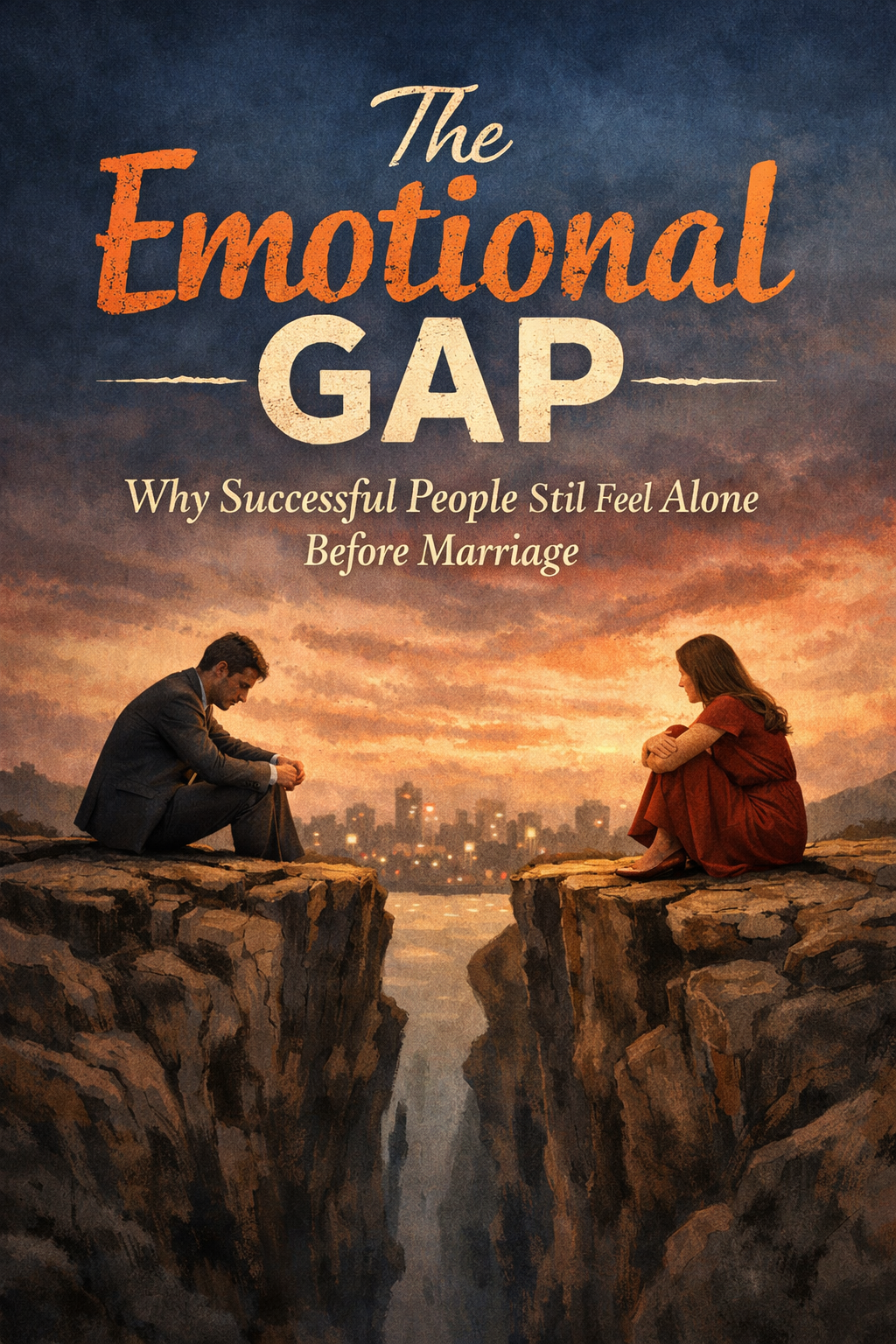
The Emotional Gap: Why Successful People Still Feel Alone Before Marriage

Introduction: Success Without Connection
In the bustling, ambitious neighborhoods of Dhaka—especially in areas like Gulshan, Banani, and Baridhara—success is everywhere. High-paying jobs, luxury apartments, international education, and polished lifestyles define a growing class of individuals who have seemingly “made it” in life.
Yet, behind this polished exterior lies a quiet, often unspoken truth:
Many successful people feel deeply alone—especially before marriage.
This loneliness is not due to lack of opportunities, intelligence, or even social exposure. In fact, these individuals often have wide social circles, active professional lives, and strong family backgrounds. But when it comes to emotional connection and life partnership, something feels missing.
This invisible disconnect is what we call the emotional gap.
In this blog, we’ll explore why this gap exists, why it’s becoming more common among high achievers, and how professional matchmaking services like Gulshan Marriage Media are helping bridge this silent divide.
What Is the Emotional Gap?
The emotional gap refers to the difference between external success and internal emotional fulfillment.
A person may have:
- A successful career
- Financial stability
- Social recognition
- A well-structured lifestyle
But still feel:
- Emotionally disconnected
- Mentally exhausted
- Unfulfilled in personal life
- Uncertain about relationships
This gap becomes most visible during the stage of life when one begins to seriously consider marriage.
The Myth: “Success Automatically Attracts the Right Partner”
One of the biggest misconceptions in modern society is:
“If you’re successful enough, the right partner will naturally come into your life.”
Unfortunately, reality tells a different story.
Many successful individuals struggle with:
- Finding compatible partners
- Building emotional intimacy
- Trusting potential matches
- Making long-term commitments
Success may increase visibility—but it does not guarantee compatibility, understanding, or emotional alignment.
Why Successful People Feel Alone
1. High Standards and Selectivity
Successful individuals often have very clear expectations. They have worked hard to build their lives and naturally want a partner who aligns with their lifestyle, values, and ambitions.
While this is not wrong, it creates a challenge:
- The “perfect match” becomes harder to find
- Small mismatches feel like deal-breakers
- The pool of acceptable partners becomes very limited
Over time, this leads to repeated rejections—and emotional fatigue.
2. Career Takes Priority Over Emotional Development
In cities like Dhaka, especially among professionals in Gulshan, career growth often comes at a cost.
Many individuals spend:
- Their 20s building careers
- Their early 30s stabilizing finances
- Their prime emotional years under pressure
As a result:
- Emotional intelligence may not develop at the same pace
- Relationship skills remain underdeveloped
- Vulnerability feels uncomfortable
So when marriage becomes a priority later, they realize something important is missing—not success, but emotional readiness.
3. Fear of Making the Wrong Choice
Ironically, the more successful someone becomes, the more cautious they get.
They ask:
- “What if this doesn’t work?”
- “What if I choose the wrong person?”
- “Will this affect my lifestyle or career?”
This fear leads to:
- Overthinking every proposal
- Delaying decisions
- Avoiding emotional risks
Eventually, this creates a cycle of hesitation—where no one feels “right enough.”
4. Social Isolation Behind a Busy Life
A packed schedule may look impressive, but it often hides a deeper issue:
Lack of meaningful emotional interaction.
Networking events, office meetings, and social gatherings rarely provide:
- Deep conversations
- Emotional vulnerability
- Genuine connection
So despite being constantly surrounded by people, many successful individuals feel:
- Emotionally isolated
- Misunderstood
- Disconnected
5. Pressure from Family and Society
In Bangladeshi culture, especially among elite families, marriage is not just a personal decision—it’s a family matter.
This creates additional pressure:
- Expectations about status, background, and education
- Family preferences overriding personal choice
- Fear of disappointing parents
As a result, individuals feel stuck between:
- What they want emotionally
- What is expected socially
This tension widens the emotional gap even further.
6. The Illusion of Too Many Choices
In the digital age, options are everywhere:
- Social media
- Matrimony websites
- Dating apps
While this seems beneficial, it often creates:
- Decision paralysis
- Unrealistic comparisons
- Constant dissatisfaction
People start thinking:
“Maybe there’s someone better out there.”
And in that search for “better,” they miss out on “good enough.”
The Silent Struggle: What People Don’t Talk About
Most successful individuals do not openly admit their loneliness.
Why?
Because society assumes:
- Success = Happiness
- Wealth = Fulfillment
- Status = Satisfaction
So instead of expressing their emotional needs, they:
- Stay silent
- Keep searching privately
- Struggle internally
This silent struggle is one of the biggest reasons the emotional gap remains invisible.
Why Marriage Feels Different for High Achievers
For many, marriage is not just about love—it’s about:
- Compatibility
- Stability
- Long-term vision
- Emotional security
Successful individuals often approach marriage like a life decision, not just a relationship.
This logical approach, while practical, sometimes:
- Reduces emotional spontaneity
- Increases pressure
- Makes the process feel transactional
As a result, emotional connection gets delayed or overlooked.
The Role of Emotional Intelligence in Marriage
Emotional intelligence (EQ) plays a critical role in:
- Understanding a partner
- Managing conflicts
- Building intimacy
- Sustaining long-term relationships
However, many high achievers:
- Prioritize IQ over EQ
- Focus on logic over emotion
- Avoid vulnerability
This creates a mismatch when entering relationships that require:
- Empathy
- Patience
- Emotional openness
How Gulshan Marriage Media Bridges the Emotional Gap
This is where professional matchmaking services come in—not just as facilitators, but as emotional connectors.
1. Personalized Matchmaking
Unlike apps, Gulshan Marriage Media focuses on:
- Individual preferences
- Family background
- Emotional compatibility
This reduces random matching and increases meaningful connections.
2. Understanding Beyond Biodata
A biodata can show:
- Education
- Career
- Family details
But it cannot show:
- Personality
- Emotional depth
- Compatibility
Professional matchmakers analyze:
- Communication style
- Values
- Lifestyle compatibility
This creates a more complete picture of a potential partner.
3. Guided Decision-Making
Instead of leaving individuals alone in their decisions, Gulshan Marriage Media:
- Provides expert guidance
- Helps manage expectations
- Encourages realistic thinking
This reduces overthinking and builds confidence.
4. Privacy and Trust
For elite clients, privacy is crucial.
Gulshan Marriage Media ensures:
- Confidential handling of profiles
- Secure communication
- Respect for personal boundaries
This creates a safe space for genuine connection.
5. Emotional Support During the Process
Matchmaking is not just about finding someone—it’s about:
- Navigating emotions
- Handling rejection
- Building confidence
Professional services provide:
- Emotional reassurance
- Practical advice
- Continuous support
Realization: Success Is Not Enough
At some point, many successful individuals come to a powerful realization:
“I have built everything… except a meaningful personal life.”
This is not a failure—it’s a shift in priorities.
They begin to understand:
- Emotional connection matters
- Compatibility matters
- Timing matters
And most importantly:
They cannot do it alone.
How to Close the Emotional Gap
1. Redefine Expectations
Instead of looking for perfection:
- Focus on compatibility
- Accept small imperfections
- Prioritize emotional connection
2. Be Open to Vulnerability
Emotional connection requires:
- Honesty
- Openness
- Willingness to express feelings
Without vulnerability, relationships remain superficial.
3. Stop Overthinking Every Decision
No match will feel 100% perfect.
Learning to:
- Trust the process
- Accept uncertainty
- Take emotional risks
is essential for progress.
4. Balance Logic with Emotion
Marriage is both:
- A practical decision
- An emotional commitment
Ignoring either side creates imbalance.
5. Seek Professional Guidance
Just like career success often requires mentors, finding the right life partner may require guidance too.
From Loneliness to Connection
The emotional gap is real—and it is growing.
In a city like Dhaka, where success is celebrated, emotional struggles often go unnoticed. But behind every polished profile is a human being looking for:
- Understanding
- Connection
- Partnership
- Belonging
Success can build a life—but only the right relationship can complete it.
That’s why more and more individuals are turning to trusted services like Gulshan Marriage Media—not just to find a partner, but to find the right emotional connection.
Because in the end, the goal is not just to get married.
The goal is to feel complete, understood, and truly connected.
The Emotional Gap: Why Successful People Still Feel Alone Before Marriage (Extended Version)

The Hidden Loneliness Behind a “Perfect Life”
At a glance, the life of a successful individual in Dhaka’s elite areas appears ideal. Social media highlights achievements—promotions, international travel, fine dining, and polished appearances. Friends and relatives often admire this lifestyle, assuming it reflects complete happiness.
But the reality behind closed doors can be very different.
After a long workday, when the phone notifications stop and the noise fades, many successful individuals experience a deep, lingering silence. It is in these quiet moments that the emotional gap becomes most apparent.
This loneliness is not dramatic or visible—it is subtle, persistent, and deeply personal.
It feels like:
- Having no one to truly share your thoughts with
- Lacking emotional support during stressful times
- Missing a sense of belonging despite external success
And over time, this feeling becomes harder to ignore.
Why Emotional Needs Get Suppressed Over Time
One of the major reasons this emotional gap grows is because successful individuals learn to suppress their emotional needs.
From an early stage, they are taught to:
- Focus on goals
- Avoid distractions
- Stay disciplined
- Prioritize achievement over emotion
While these traits help build careers, they also create a pattern:
Emotions are delayed, ignored, or minimized.
As a result:
- Expressing feelings feels uncomfortable
- Asking for emotional support feels like weakness
- Building deep connections becomes unfamiliar
By the time marriage becomes a priority, many realize they have built a strong external life—but an underdeveloped emotional one.
The Pressure to Maintain an Image
Success often comes with an invisible burden: the need to maintain a certain image.
In social and family circles, successful individuals are expected to appear:
- Confident
- Composed
- In control
- Emotionally stable
Admitting loneliness or confusion can feel like:
- Losing status
- Showing vulnerability
- Breaking expectations
So instead of opening up, many choose to:
- Hide their struggles
- Avoid emotional conversations
- Pretend everything is fine
This emotional masking creates distance—not just from others, but from their own true feelings.
The Difficulty of Finding “Equal” Partners
Another major factor contributing to the emotional gap is the challenge of finding someone on a similar level.
Successful individuals often look for partners who match them in:
- Education
- Career ambition
- Financial stability
- Social background
While this is understandable, it significantly narrows the pool.
Even when such matches are found, new challenges arise:
- Ego clashes
- Competitive mindsets
- Lack of emotional softness
Instead of complementing each other, both individuals may remain guarded, leading to:
- Surface-level conversations
- Lack of emotional depth
- Difficulty building intimacy
When Independence Becomes Isolation
Independence is one of the greatest strengths of successful individuals.
They are used to:
- Making decisions alone
- Managing their own lives
- Solving their own problems
But this independence can slowly turn into emotional isolation.
They begin to feel:
- “I don’t need anyone”
- “I can handle everything myself”
While this mindset works professionally, it becomes a barrier in relationships.
Because relationships require:
- Interdependence
- Emotional sharing
- Mutual reliance
Without these, connection remains shallow.
The Impact of Past Experiences
Many successful individuals have faced:
- Failed relationships
- Broken engagements
- Repeated rejections
Each experience leaves a mark.
Over time, they develop:
- Emotional walls
- Trust issues
- Fear of vulnerability
They become more cautious, more selective, and more guarded.
While this protects them from pain, it also prevents:
- Genuine connection
- Emotional openness
- Deep bonding
Thus, the emotional gap continues to widen.
The Role of Timing in Emotional Disconnect
Timing plays a critical role in relationships.
Many individuals delay marriage for valid reasons:
- Career growth
- Financial stability
- Family responsibilities
However, by the time they feel “ready,” they may find:
- Their social circle has changed
- Suitable matches are fewer
- Emotional readiness does not match practical readiness
This mismatch creates frustration.
They feel:
“I’m ready now—but the right opportunity isn’t there.”
Why Conversations Feel Superficial
One common complaint among successful singles is:
“I meet people, but conversations don’t go deep.”
This happens because:
- People focus on achievements rather than emotions
- Discussions revolve around career, travel, or lifestyle
- Vulnerability is avoided
As a result:
- Interactions remain polite but shallow
- Emotional connection fails to develop
Without meaningful conversations, even good matches fail to progress.
The Fear of Losing Freedom
Another subtle but powerful factor is the fear of losing independence.
Successful individuals often worry:
- “Will marriage limit my freedom?”
- “Will I have to compromise my lifestyle?”
- “Will my career be affected?”
These concerns lead to hesitation.
Even when they meet compatible partners, they:
- Delay commitment
- Keep emotional distance
- Avoid serious discussions
This creates a paradox:
They want connection—but fear the change it brings.
The Emotional Cost of Repeated Rejections
Rejection is part of the matchmaking process—but for high achievers, it can feel particularly difficult.
Why?
Because they are not used to failure.
Repeated rejections lead to:
- Self-doubt
- Frustration
- Emotional exhaustion
They start questioning:
- “What am I doing wrong?”
- “Why isn’t this working?”
Over time, this affects confidence and willingness to try again.
How Families Misinterpret the Emotional Gap
Families often see only the external success.
They assume:
- “Everything is fine”
- “Marriage will happen eventually”
But they may not understand:
- The emotional struggles
- The internal confusion
- The growing loneliness
This lack of understanding creates distance between:
- Individual expectations
- Family pressure
And the individual feels even more isolated.
The Shift: When Priorities Begin to Change
At some point, a shift happens.
Successful individuals begin to realize:
- Achievements feel incomplete without someone to share them with
- Social life cannot replace emotional intimacy
- Time is passing
This realization is often triggered by:
- Seeing friends get married
- Family discussions
- Personal reflection
And suddenly, marriage becomes a priority—not as a social obligation, but as an emotional need.
The Importance of Emotional Compatibility
One of the biggest lessons learned during this phase is:
Compatibility is not just about background—it’s about emotional connection.
True compatibility includes:
- Understanding each other’s feelings
- Supporting each other during challenges
- Communicating openly
- Sharing values and life goals
Without emotional compatibility, even the most “perfect” matches fail.
Why Professional Matchmaking Becomes Essential
At this stage, many individuals realize they need help.
Not because they are incapable—but because:
- Their time is limited
- Their expectations are complex
- Their emotional needs are specific
Professional matchmaking services like Gulshan Marriage Media provide:
- Structured guidance
- Curated matches
- Emotional insight
This transforms the process from:
Random searching → Purposeful matching
The Value of Human Understanding Over Algorithms
In today’s digital world, many rely on apps and online platforms.
But algorithms cannot:
- Understand emotions
- Assess personality deeply
- Predict long-term compatibility
Human matchmakers, on the other hand:
- Listen
- Observe
- Analyze behavior and preferences
This human touch makes a significant difference in bridging the emotional gap.
Learning to Be Emotionally Available
One of the most important steps in closing the gap is becoming emotionally available.
This means:
- Being open to connection
- Letting go of past fears
- Expressing feelings honestly
It is not easy—but it is necessary.
Because without emotional availability, even the best match will not succeed.
The Role of Communication in Building Connection
Strong relationships are built on communication.
Successful individuals must learn to:
- Go beyond surface-level topics
- Ask meaningful questions
- Share personal experiences
Good communication creates:
- Trust
- Understanding
- Emotional closeness
Breaking the Cycle of Perfectionism
Perfectionism is one of the biggest barriers.
Waiting for:
- The perfect person
- The perfect timing
- The perfect situation
Often leads to:
- Missed opportunities
- Endless delays
- Growing loneliness
Learning to accept “good and real” over “perfect and imaginary” is crucial.
From Independence to Partnership
Marriage is not about losing independence—it’s about sharing life.
It involves:
- Mutual respect
- Shared responsibilities
- Emotional support
Successful individuals must shift their mindset from:
“I” → “We”
This transition is key to building a meaningful relationship.
The Emotional Reward of Finding the Right Partner

When the right connection is finally found, the transformation is powerful.
Suddenly:
- Conversations feel natural
- Silence feels comfortable
- Life feels more meaningful
The emotional gap begins to close.
And for the first time, success feels complete.
Final Thoughts: Bridging the Gap
The emotional gap is not a weakness—it is a signal.
A signal that:
- Something important is missing
- Emotional needs are not being met
- Change is necessary
For successful individuals in Dhaka, especially in elite areas like Gulshan, this realization is becoming more common.
And with the right mindset, guidance, and support, this gap can be bridged.
Because in the end:
A successful life is not just measured by achievements—but by the quality of relationships we build.